Word Explanation
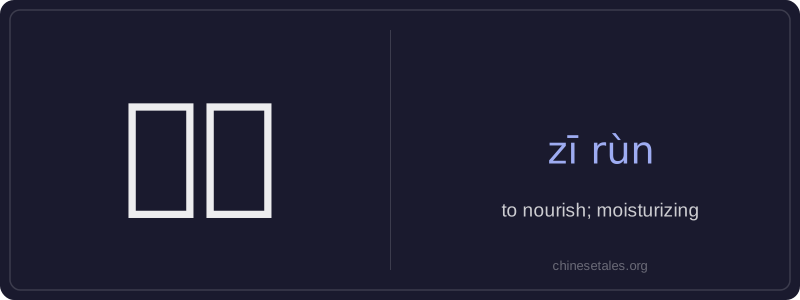
滋润 (zī rùn) literally combines 滋 (zī), meaning 'to nourish' or 'to enrich', and 润 (rùn), meaning 'moist' or 'smooth'. Together, they convey the idea of providing moisture and nourishment — especially to skin, hair, or the body — restoring softness, elasticity, and vitality. It’s commonly used in health, beauty, and traditional Chinese medicine contexts to describe effects that counteract dryness and depletion.
The word functions both as an adjective ('moisturizing', 'nourishing') and a verb ('to moisturize', 'to nourish deeply'). As an adjective, it often modifies nouns like 皮肤 (skin), 嘴唇 (lips), or 肺 (lungs); as a verb, it appears in constructions like 有助于滋润… (helps nourish…) or 给…滋润 (provides moisture to…). While it can be used metaphorically (e.g., for enriching the mind or spirit), its most frequent usage relates to physical hydration and wellness.
Example Sentences
Related Words
国语
‘Guó yǔ’ literally means 'national language'—
无论谁
‘无论谁’ (wú lùn shéi) is a pronoun meaning
外语
‘外语’ literally means ‘outside language’ —
面条
‘面条’ (miàn tiáo) literally means ‘flour str
认同
‘认同’ (tóng rèn) is a verb meaning ‘to ident
不对
不对 (bù duì) literally combines 不 (bù), meani
认为
‘认为’ (rèn wéi) is a transitive verb meaning
违规
违规 (wéi guī) literally means 'to violate rules