Word Explanation
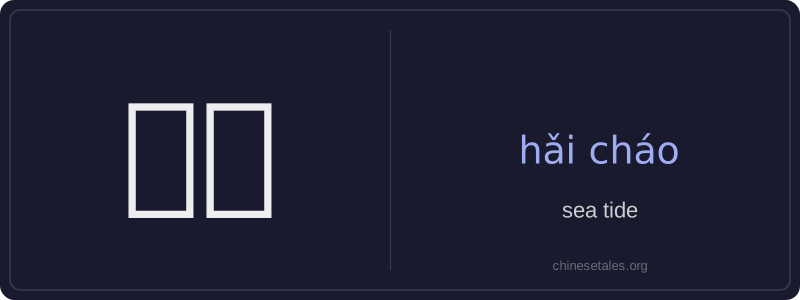
‘海潮’ (hǎi cháo) literally combines ‘海’ (hǎi), meaning ‘sea’ or ‘ocean’, and ‘潮’ (cháo), meaning ‘tide’ or ‘tidal current’. Together, they refer specifically to the regular rise and fall of sea level caused by gravitational forces from the moon and sun. Unlike the broader term ‘潮汐’ (cháo xī), which includes both tides and tidal phenomena in scientific contexts, ‘海潮’ emphasizes the visible, natural movement of seawater along coastlines — especially noticeable during high and low tide cycles.
This word is commonly used in geographical, environmental, and everyday coastal descriptions. It appears in weather reports, marine ecology discussions, travel writing about beaches or islands, and literature evoking oceanic imagery. While ‘潮’ alone can mean ‘trend’ or ‘fashion’ in figurative usage (e.g., 风潮 fēng cháo), ‘海潮’ is strictly literal and never used metaphorically. It’s neutral in register and appropriate in both spoken and written Chinese.
Example Sentences
Related Words
国语
‘Guó yǔ’ literally means 'national language'—
无论谁
‘无论谁’ (wú lùn shéi) is a pronoun meaning
外语
‘外语’ literally means ‘outside language’ —
面条
‘面条’ (miàn tiáo) literally means ‘flour str
认同
‘认同’ (tóng rèn) is a verb meaning ‘to ident
不对
不对 (bù duì) literally combines 不 (bù), meani
认为
‘认为’ (rèn wéi) is a transitive verb meaning
违规
违规 (wéi guī) literally means 'to violate rules