Word Explanation
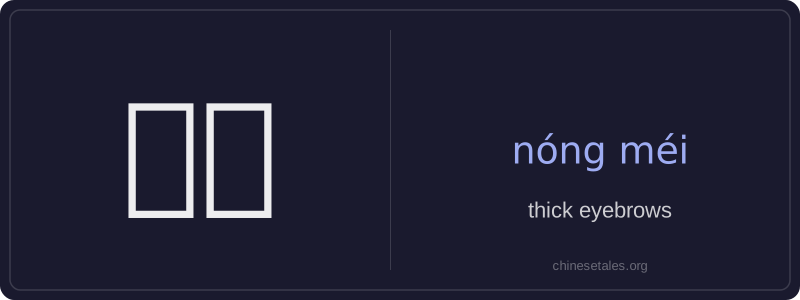
‘浓眉’ literally means 'thick eyebrows' — the character 浓 (nóng) means 'dense', 'strong', or 'intense', while 眉 (méi) means 'eyebrow'. Together, they describe eyebrows that are dark, full, and well-defined, often conveying a sense of vigor, masculinity, or striking presence. This term is commonly used in descriptive writing — especially when portraying people or animals with distinctive facial features.
In Chinese literature and everyday speech, 浓眉 frequently appears in physical descriptions to suggest strength, seriousness, or charisma. It’s especially common in animal descriptions (e.g., lions, tigers, or certain dog breeds) whose bold brow ridges or dark fur above the eyes resemble thick eyebrows. Though primarily descriptive, it rarely functions as a verb or adjective on its own; instead, it serves as a noun phrase or attributive noun (e.g., 浓眉大眼 — 'thick eyebrows and big eyes'). It carries neutral-to-positive connotations, evoking admiration rather than criticism.
Example Sentences
Related Words
国语
‘Guó yǔ’ literally means 'national language'—
无论谁
‘无论谁’ (wú lùn shéi) is a pronoun meaning
外语
‘外语’ literally means ‘outside language’ —
面条
‘面条’ (miàn tiáo) literally means ‘flour str
认同
‘认同’ (tóng rèn) is a verb meaning ‘to ident
不对
不对 (bù duì) literally combines 不 (bù), meani
认为
‘认为’ (rèn wéi) is a transitive verb meaning
违规
违规 (wéi guī) literally means 'to violate rules