Word Explanation
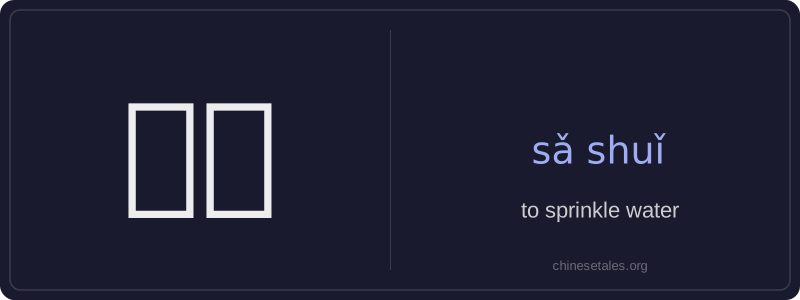
洒水 literally means 'to scatter water' — the character 洒 (sǎ) means 'to sprinkle, splash, or scatter', and 水 (shuǐ) means 'water'. Together, they form a compound verb meaning 'to sprinkle water', typically for purposes like cooling surfaces, reducing dust, watering plants, or cleaning outdoor areas. It’s a simple, transitive verb that usually takes a direct object (e.g., 洒水车 'water-sprinkling truck') or appears in imperative or descriptive contexts.
This verb is commonly used in daily life — for example, gardeners洒水 on lawns, municipal workers洒水 on streets to suppress dust, or parents teach children to洒水 on indoor plants. It’s neutral in register, appropriate in both spoken and written Chinese, and often appears in instructions, news reports about urban management, or childcare routines. Unlike 泼水 (to splash water, often playfully or forcefully), 洒水 implies controlled, gentle dispersion — not flooding or throwing.
Example Sentences
Related Words
国语
‘Guó yǔ’ literally means 'national language'—
无论谁
‘无论谁’ (wú lùn shéi) is a pronoun meaning
外语
‘外语’ literally means ‘outside language’ —
面条
‘面条’ (miàn tiáo) literally means ‘flour str
认同
‘认同’ (tóng rèn) is a verb meaning ‘to ident
不对
不对 (bù duì) literally combines 不 (bù), meani
认为
‘认为’ (rèn wéi) is a transitive verb meaning
违规
违规 (wéi guī) literally means 'to violate rules