Word Explanation
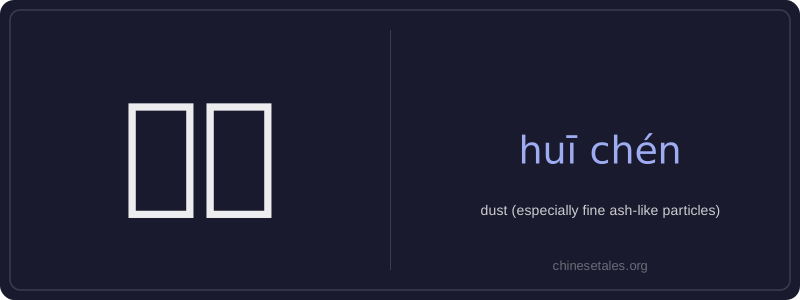
‘灰尘’ (huī chén) literally combines ‘灰’ (huī), meaning ‘ash’ or ‘gray,’ and ‘尘’ (chén), meaning ‘dust’ or ‘fine particles.’ Together, it refers specifically to fine, dry, airborne particles—often grayish in color—that accumulate on surfaces, especially from combustion, weathering, or everyday wear. Unlike the more general term ‘尘土’ (chén tǔ), which implies dust mixed with soil, ‘灰尘’ emphasizes light, powdery, ash-like residue commonly found indoors: on furniture, electronics, bookshelves, or window sills.
This word is frequently used in contexts related to cleaning, indoor air quality, and household maintenance. It carries a neutral-to-slightly-negative connotation, suggesting something undesirable that needs removal—e.g., when dusting, vacuuming, or discussing allergies. While ‘尘’ alone can appear in literary or poetic usage (e.g., ‘红尘’ hóng chén, ‘mortal world’), ‘灰尘’ is strictly colloquial and practical, rarely appearing in formal or abstract registers.
Example Sentences
Related Words
国语
‘Guó yǔ’ literally means 'national language'—
无论谁
‘无论谁’ (wú lùn shéi) is a pronoun meaning
外语
‘外语’ literally means ‘outside language’ —
面条
‘面条’ (miàn tiáo) literally means ‘flour str
认同
‘认同’ (tóng rèn) is a verb meaning ‘to ident
不对
不对 (bù duì) literally combines 不 (bù), meani
认为
‘认为’ (rèn wéi) is a transitive verb meaning
违规
违规 (wéi guī) literally means 'to violate rules