Word Explanation
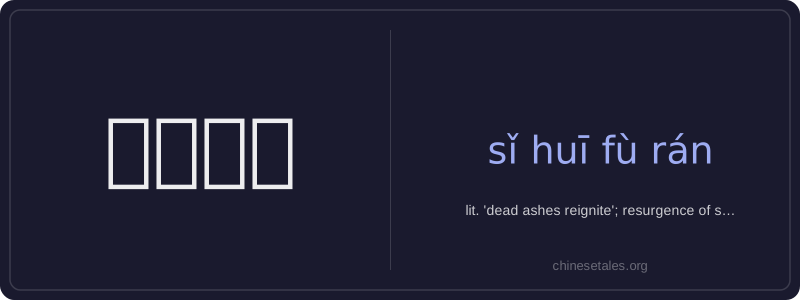
'Dead ashes reignite' is a vivid idiom describing the unexpected resurgence of something previously thought extinguished—such as a conflict, rivalry, emotion, or problem. Literally, 死 (sǐ) means 'dead', 灰 (huī) 'ashes', 复 (fù) 'again', and 燃 (rán) 'to burn'. Together, they evoke the image of cold, lifeless ashes suddenly bursting back into flame—an apt metaphor for dormant forces reawakening with intensity.
This idiom is commonly used in formal or literary contexts to describe the revival of negative or troublesome phenomena: long-dormant tensions between groups, a relapse in illness, the return of an old grudge, or even the resurgence of outdated ideas. It carries a distinctly cautionary or critical tone, implying that the 'reignition' is undesirable and potentially dangerous. While rooted in classical Chinese, it remains current in modern media, political commentary, and literature.
Example Sentences
Related Words
国语
‘Guó yǔ’ literally means 'national language'—
无论谁
‘无论谁’ (wú lùn shéi) is a pronoun meaning
外语
‘外语’ literally means ‘outside language’ —
面条
‘面条’ (miàn tiáo) literally means ‘flour str
认同
‘认同’ (tóng rèn) is a verb meaning ‘to ident
不对
不对 (bù duì) literally combines 不 (bù), meani
认为
‘认为’ (rèn wéi) is a transitive verb meaning
违规
违规 (wéi guī) literally means 'to violate rules