Word Explanation
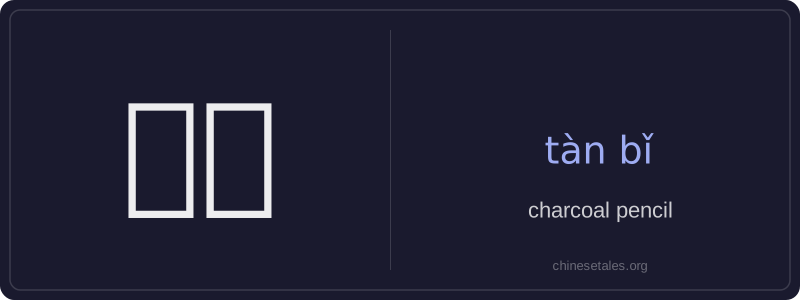
‘炭筆’ (tàn bǐ) literally means ‘charcoal + pencil’ and refers to a drawing tool made from compressed charcoal, used primarily for sketching, shading, and expressive line work. The character 炭 (tàn) means ‘charcoal’, derived from wood burned in low-oxygen conditions, while 筆 (bǐ) means ‘pen’ or ‘writing/drawing instrument’. Together, they form a compound noun denoting a specific art supply—not a writing tool for text, but a medium for artistic expression.
This word is commonly used in art education, studio settings, and among hobbyists or professional artists in Chinese-speaking contexts. Unlike graphite pencils, charcoal pencils produce softer, more easily smudged lines and are valued for their rich black tones and versatility in creating texture and contrast. They’re often mentioned alongside other art materials like 鉛筆 (qiān bǐ, graphite pencil), 粉筆 (fěn bǐ, chalk), and 水彩 (shuǐ cǎi, watercolor).
Example Sentences
Related Words
国语
‘Guó yǔ’ literally means 'national language'—
无论谁
‘无论谁’ (wú lùn shéi) is a pronoun meaning
外语
‘外语’ literally means ‘outside language’ —
面条
‘面条’ (miàn tiáo) literally means ‘flour str
认同
‘认同’ (tóng rèn) is a verb meaning ‘to ident
不对
不对 (bù duì) literally combines 不 (bù), meani
认为
‘认为’ (rèn wéi) is a transitive verb meaning
违规
违规 (wéi guī) literally means 'to violate rules