Word Explanation
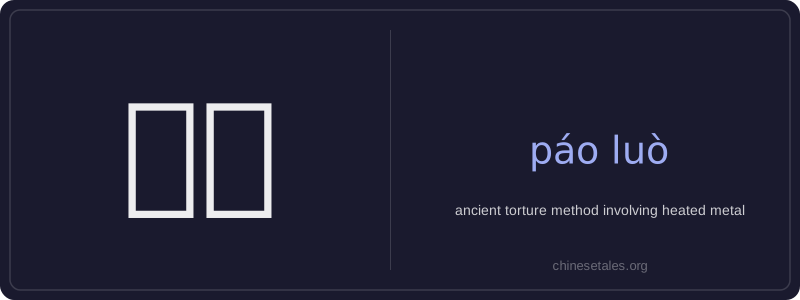
‘Páo luò’ refers to a brutal torture method used in ancient China, particularly during the Shang dynasty. It involved heating a bronze pillar until red-hot and forcing victims to walk or cling to it, causing severe burns or death. The character 炮 (páo) originally meant ‘to roast’ or ‘to bake’ — here implying intense heating — while 烙 (luò) means ‘to sear’ or ‘to brand’, emphasizing the scorching effect on the skin. Together, they evoke the horrifying process of roasting and branding with metal.
This term appears almost exclusively in historical texts, classical literature, and discussions of ancient cruelty — especially when criticizing tyrannical rulers like King Zhou of Shang. It carries strong negative connotations and is never used in modern legal, medical, or everyday contexts. Due to its graphic and archaic nature, it’s mainly encountered in academic, literary, or moral-historical discourse, often as a metaphor for extreme oppression or injustice.
Example Sentences
Related Words
国语
‘Guó yǔ’ literally means 'national language'—
无论谁
‘无论谁’ (wú lùn shéi) is a pronoun meaning
外语
‘外语’ literally means ‘outside language’ —
面条
‘面条’ (miàn tiáo) literally means ‘flour str
认同
‘认同’ (tóng rèn) is a verb meaning ‘to ident
不对
不对 (bù duì) literally combines 不 (bù), meani
认为
‘认为’ (rèn wéi) is a transitive verb meaning
违规
违规 (wéi guī) literally means 'to violate rules