Word Explanation
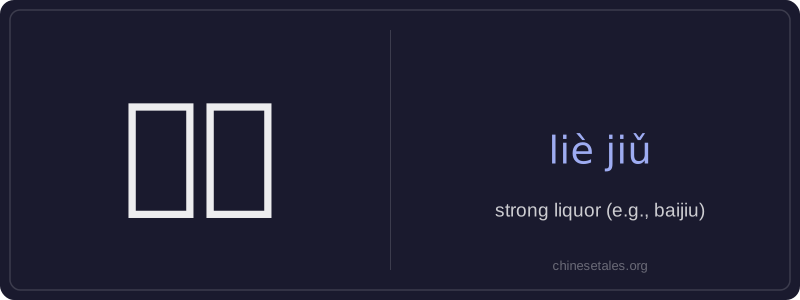
'Liè jiǔ' literally combines 烈 (liè), meaning 'intense', 'fierce', or 'strong', and 酒 (jiǔ), meaning 'alcoholic beverage' or 'liquor'. Together, they refer specifically to high-alcohol distilled spirits—most commonly Chinese baijiu, but also including Western liquors like whiskey or vodka when emphasizing potency. Unlike general terms like 酒 (jiǔ) or 白酒 (bái jiǔ), 烈酒 carries a connotation of strength, heat, and potential intensity—both in flavor and physiological effect.
This term is frequently used in health warnings, cultural discussions about drinking customs, or descriptive food-and-drink writing. It appears in formal contexts (e.g., public health campaigns) and casual speech alike, often to distinguish strong spirits from milder fermented drinks like huangjiu or beer. The word evokes sensory qualities: burning sensation, sharp aroma, and warming effect—hence its frequent pairing with verbs like 喝 (hē, 'to drink'), 忌 (jì, 'to avoid'), or 伤 (shāng, 'to harm').
Example Sentences
Related Words
国语
‘Guó yǔ’ literally means 'national language'—
无论谁
‘无论谁’ (wú lùn shéi) is a pronoun meaning
外语
‘外语’ literally means ‘outside language’ —
面条
‘面条’ (miàn tiáo) literally means ‘flour str
认同
‘认同’ (tóng rèn) is a verb meaning ‘to ident
不对
不对 (bù duì) literally combines 不 (bù), meani
认为
‘认为’ (rèn wéi) is a transitive verb meaning
违规
违规 (wéi guī) literally means 'to violate rules