Word Explanation
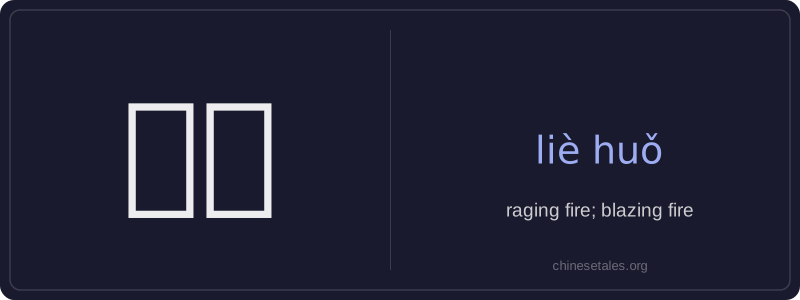
烈火 literally combines 烈 (liè), meaning 'intense', 'fierce', or 'severe', and 火 (huǒ), meaning 'fire'. Together, they form a vivid, literary compound meaning 'raging fire' or 'blazing fire'—emphasizing extreme heat, brightness, and destructive power. Unlike the neutral word 火 (huǒ) alone, 烈火 carries strong imagery and emotional weight, often suggesting uncontrollable energy or transformative force.
This term appears frequently in descriptive writing, historical narratives, poetry, and idioms (e.g., 烈火真金 — 'true gold withstands fierce fire'). It’s rarely used for everyday fires (like cooking or candles); instead, it evokes wildfires, battlefield conflagrations, volcanic eruptions, or metaphorical uses like 'the烈火 of passion' or 'the烈火 of revolution'. Its tone is elevated and slightly formal, making it unsuitable for casual speech unless used intentionally for rhetorical effect.
Example Sentences
Related Words
国语
‘Guó yǔ’ literally means 'national language'—
无论谁
‘无论谁’ (wú lùn shéi) is a pronoun meaning
外语
‘外语’ literally means ‘outside language’ —
面条
‘面条’ (miàn tiáo) literally means ‘flour str
认同
‘认同’ (tóng rèn) is a verb meaning ‘to ident
不对
不对 (bù duì) literally combines 不 (bù), meani
认为
‘认为’ (rèn wéi) is a transitive verb meaning
违规
违规 (wéi guī) literally means 'to violate rules