Word Explanation
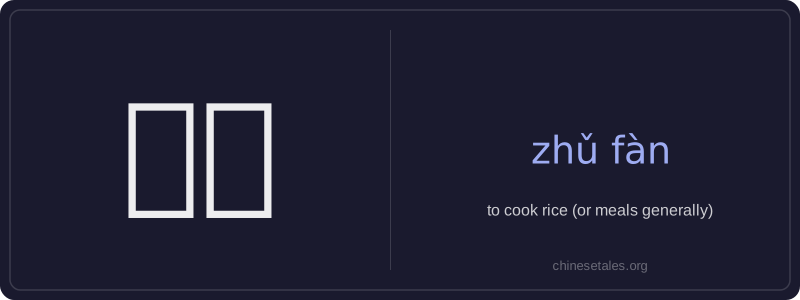
煮饭 (zhǔ fàn) literally means 'to boil/cook rice' — 煮 (zhǔ) means 'to boil, to cook by simmering or boiling', and 饭 (fàn) means 'cooked rice' or more broadly 'a meal'. Though the characters point specifically to rice, in everyday spoken Mandarin, 煮饭 commonly refers to the general act of preparing a main meal — especially dinner — whether it involves rice, noodles, vegetables, or meat. It’s a core verb in domestic and family contexts, often implying hands-on cooking rather than reheating or ordering takeout.
This phrase is frequently used in daily routines, household responsibilities, and conversations about chores or family roles. It appears in questions like '谁煮饭?' (Who cooks?) and statements like '我每天下班后煮饭' (I cook every day after work). While technically it can refer only to rice preparation, native speakers rarely use it so narrowly — it functions as a colloquial, holistic term for 'cooking dinner' or 'making the main meal'.
Example Sentences
Related Words
国语
‘Guó yǔ’ literally means 'national language'—
无论谁
‘无论谁’ (wú lùn shéi) is a pronoun meaning
外语
‘外语’ literally means ‘outside language’ —
面条
‘面条’ (miàn tiáo) literally means ‘flour str
认同
‘认同’ (tóng rèn) is a verb meaning ‘to ident
不对
不对 (bù duì) literally combines 不 (bù), meani
认为
‘认为’ (rèn wéi) is a transitive verb meaning
违规
违规 (wéi guī) literally means 'to violate rules