Word Explanation
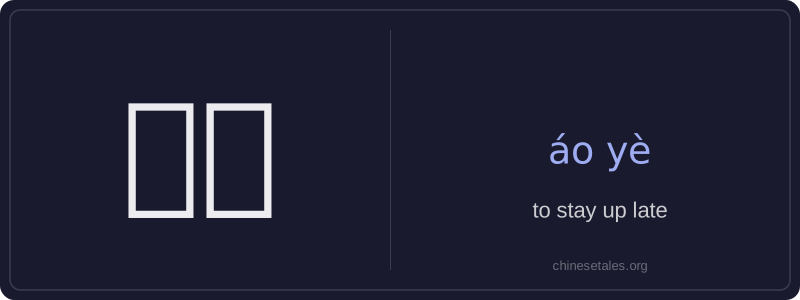
‘熬夜’ literally combines ‘熬’ (to endure, to simmer slowly over low heat) and ‘夜’ (night), evoking the image of enduring through the night—like a pot simmering long into darkness. It means to stay awake later than usual, especially past midnight, often for work, study, or entertainment. Unlike neutral terms like ‘晚睡’ (go to bed late), ‘熬夜’ carries a slight negative connotation: it implies strain, fatigue, or health risk, and is commonly associated with sacrifice or poor habits.
This verb is frequently used in advice, warnings, or self-reflection—for example, doctors may warn patients against frequent ‘熬夜’, students might complain about ‘熬夜复习’ (staying up late to review), and parents often tell children ‘别熬夜’ (don’t stay up late). It functions as a transitive or intransitive verb and typically appears in simple clauses, often with time phrases (e.g., ‘经常熬夜’, ‘昨晚熬夜了’) or modal verbs (e.g., ‘不能熬夜’).
Example Sentences
Related Words
国语
‘Guó yǔ’ literally means 'national language'—
无论谁
‘无论谁’ (wú lùn shéi) is a pronoun meaning
外语
‘外语’ literally means ‘outside language’ —
面条
‘面条’ (miàn tiáo) literally means ‘flour str
认同
‘认同’ (tóng rèn) is a verb meaning ‘to ident
不对
不对 (bù duì) literally combines 不 (bù), meani
认为
‘认为’ (rèn wéi) is a transitive verb meaning
违规
违规 (wéi guī) literally means 'to violate rules