Word Explanation
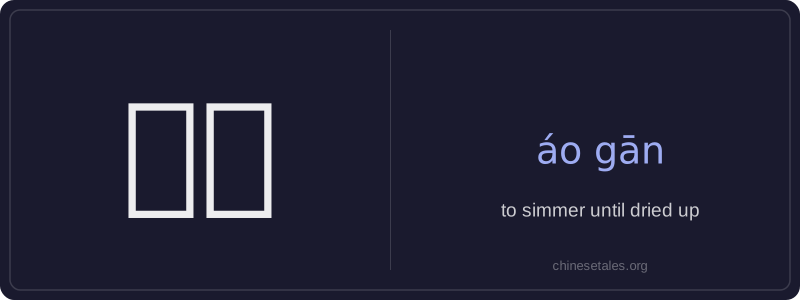
熬干 (áo gān) is a compound verb meaning 'to simmer or boil down until completely dried up'—typically referring to liquid being reduced over heat until no moisture remains. The first character, 熬 (áo), conveys prolonged heating, often with effort or endurance (as in 'to stew' or 'to熬 through'), while 干 (gān) means 'dry' or 'dried out'. Together, they emphasize the process and final state: not just evaporation, but thorough, deliberate reduction to dryness.
This term is commonly used in cooking, herbal medicine preparation, and traditional food preservation—especially when making concentrated pastes, dried herbal extracts, or candied fruits. It implies careful control of heat and time; rushing may cause burning rather than clean drying. Though literal, it can occasionally appear metaphorically (e.g., '熬干心血'—'to exhaust one’s energy and resources'), but such usage is literary and rare in everyday speech.
Example Sentences
Related Words
国语
‘Guó yǔ’ literally means 'national language'—
无论谁
‘无论谁’ (wú lùn shéi) is a pronoun meaning
外语
‘外语’ literally means ‘outside language’ —
面条
‘面条’ (miàn tiáo) literally means ‘flour str
认同
‘认同’ (tóng rèn) is a verb meaning ‘to ident
不对
不对 (bù duì) literally combines 不 (bù), meani
认为
‘认为’ (rèn wéi) is a transitive verb meaning
违规
违规 (wéi guī) literally means 'to violate rules