Word Explanation
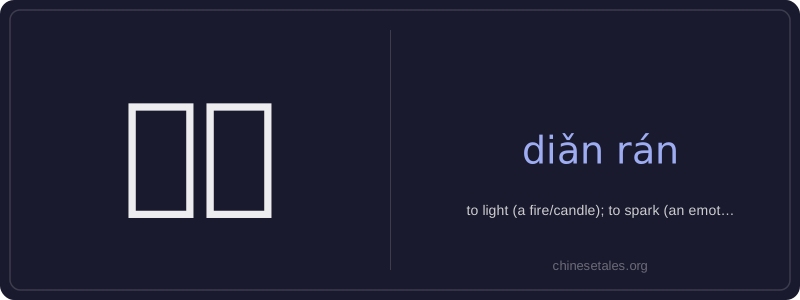
点燃 literally means 'to light' or 'to ignite', combining 点 (diǎn, 'to touch, to point, to light') and 燃 (rán, 'to burn'). While it can refer to physically lighting something like a candle, firecracker, or campfire, it’s also widely used metaphorically — especially in written and formal speech — to describe sparking an emotion, idea, or movement. For example, a powerful speech might 点燃 enthusiasm or hope in listeners.
The verb is transitive and typically requires a direct object (e.g., 点燃蜡烛, 点燃激情). It carries a slightly literary or elevated tone, making it common in news reports, essays, speeches, and literature — less frequent in casual daily talk, where simpler verbs like 点 (to light) or 着 (to catch fire) may be preferred. It does not take aspect particles like 了 or 过 as freely as colloquial verbs; context often implies completion.
Example Sentences
Related Words
国语
‘Guó yǔ’ literally means 'national language'—
无论谁
‘无论谁’ (wú lùn shéi) is a pronoun meaning
外语
‘外语’ literally means ‘outside language’ —
面条
‘面条’ (miàn tiáo) literally means ‘flour str
认同
‘认同’ (tóng rèn) is a verb meaning ‘to ident
不对
不对 (bù duì) literally combines 不 (bù), meani
认为
‘认为’ (rèn wéi) is a transitive verb meaning
违规
违规 (wéi guī) literally means 'to violate rules