Word Explanation
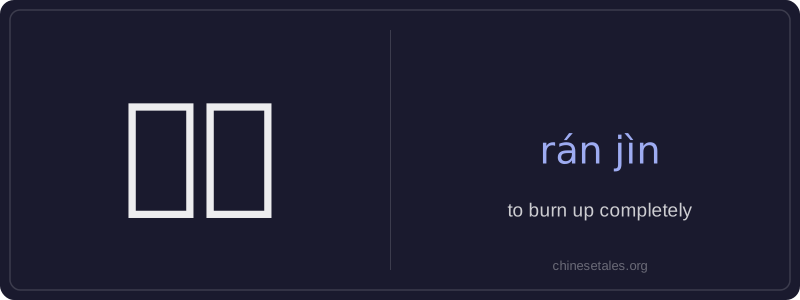
燃尽 (rán jìn) is a verb meaning 'to burn up completely' — leaving nothing but ash or residue. The first character 燃 (rán) means 'to burn', and the second character 尽 (jìn) means 'to exhaust' or 'to finish completely'. Together, they emphasize total consumption by fire, not just partial burning. This term carries a sense of finality and irreversibility.
It’s commonly used in descriptive or literary contexts — for example, describing wildfires consuming forests, candles burning down to the base, or fuel being fully consumed in engines or stoves. While it can appear in technical reports, it’s more frequent in written Chinese than casual speech, where simpler alternatives like 烧光 (shāo guāng) may be preferred. It often appears with time-related adverbs (e.g., 已经燃尽, 终于燃尽) or passive constructions (e.g., 油料已被燃尽). The word implies completeness, so using it with qualifiers like 'almost' or 'partially' creates contradiction.
Example Sentences
Related Words
国语
‘Guó yǔ’ literally means 'national language'—
无论谁
‘无论谁’ (wú lùn shéi) is a pronoun meaning
外语
‘外语’ literally means ‘outside language’ —
面条
‘面条’ (miàn tiáo) literally means ‘flour str
认同
‘认同’ (tóng rèn) is a verb meaning ‘to ident
不对
不对 (bù duì) literally combines 不 (bù), meani
认为
‘认为’ (rèn wéi) is a transitive verb meaning
违规
违规 (wéi guī) literally means 'to violate rules