Word Explanation
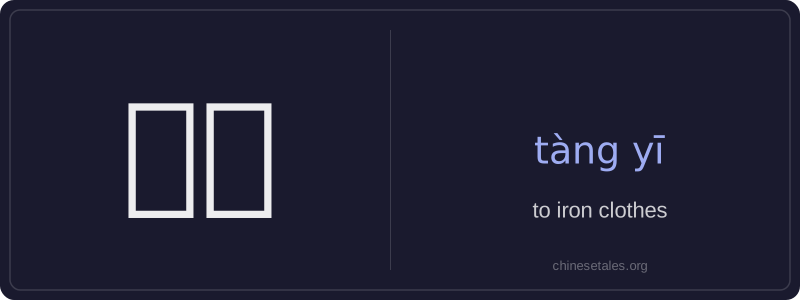
烫衣 (tàng yī) literally means 'to scald clothes', but in modern Chinese it is the standard term for 'to iron clothes'—referring to the process of using a hot iron to remove wrinkles and smooth fabric. The character 烫 originally means 'to scald' or 'to burn', reflecting the heat involved, while 衣 means 'clothing' or 'garment'. Together, they form a compact verb phrase commonly used in household and laundry contexts.
This verb is typically used in daily routines, especially when describing chores, preparing for work or formal events, or discussing domestic responsibilities. It’s neutral in register—appropriate in both spoken and written Chinese—and often appears in imperative sentences ('Please iron the shirt') or past-tense narratives ('She ironed the blouse yesterday'). Unlike some verbs, 烫衣 is not separable: you cannot insert objects or aspect particles between 烫 and 衣; instead, modifiers come before or after the whole phrase (e.g., 仔细烫衣, 烫衣花了半小时).
Example Sentences
Related Words
国语
‘Guó yǔ’ literally means 'national language'—
无论谁
‘无论谁’ (wú lùn shéi) is a pronoun meaning
外语
‘外语’ literally means ‘outside language’ —
面条
‘面条’ (miàn tiáo) literally means ‘flour str
认同
‘认同’ (tóng rèn) is a verb meaning ‘to ident
不对
不对 (bù duì) literally combines 不 (bù), meani
认为
‘认为’ (rèn wéi) is a transitive verb meaning
违规
违规 (wéi guī) literally means 'to violate rules