Word Explanation
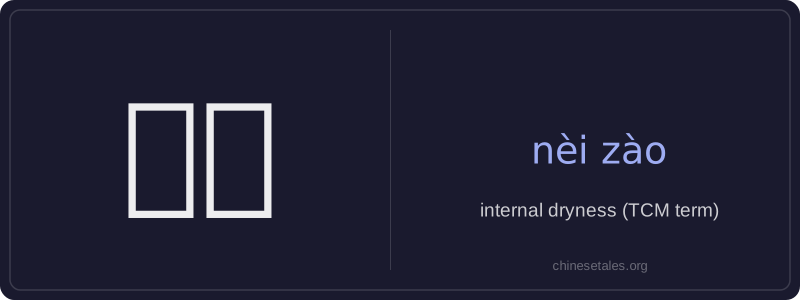
‘Nèi zào’ (internal dryness) is a fundamental concept in Traditional Chinese Medicine (TCM) that describes a pathological state where the body’s yin fluids are insufficient, leading to dryness symptoms originating from within—not caused by external environmental factors. The character 内 (nèi) means ‘inside’ or ‘internal,’ while 燥 (zào) means ‘dryness’ or ‘dry heat.’ Together, they denote a deficiency pattern, often linked to depletion of yin, blood, or body fluids due to chronic illness, excessive stress, aging, or overconsumption of spicy/drying foods.
This condition commonly manifests as dry mouth and throat, dry skin or hair, constipation, scanty dark urine, and irritability or insomnia. TCM practitioners diagnose nèi zào through pulse and tongue examination—typically observing a thin, rapid pulse and a red, peeled, or dry tongue. Treatment focuses on nourishing yin and moistening dryness using herbs like Shāshēn (Adenophora root) or Mài Dōng (Ophiopogon tuber), along with lifestyle adjustments such as increased water intake and reduced caffeine/alcohol.
Example Sentences
Related Words
国语
‘Guó yǔ’ literally means 'national language'—
无论谁
‘无论谁’ (wú lùn shéi) is a pronoun meaning
外语
‘外语’ literally means ‘outside language’ —
面条
‘面条’ (miàn tiáo) literally means ‘flour str
认同
‘认同’ (tóng rèn) is a verb meaning ‘to ident
不对
不对 (bù duì) literally combines 不 (bù), meani
认为
‘认为’ (rèn wéi) is a transitive verb meaning
违规
违规 (wéi guī) literally means 'to violate rules