Word Explanation
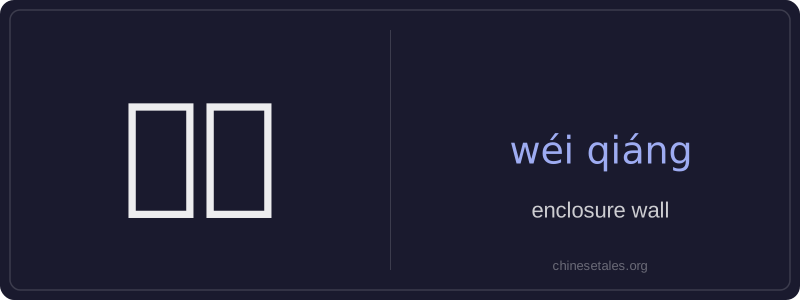
‘围墙’ literally combines ‘围’ (to enclose, surround) and ‘墙’ (wall), meaning an enclosing wall that defines and protects the perimeter of a space. Unlike interior walls or load-bearing structures, a 围墙 is specifically built to mark boundaries — around homes, schools, factories, temples, or compounds — often for security, privacy, or zoning purposes. It may be made of brick, concrete, stone, or even bamboo, and can range from simple low barriers to tall, fortified structures.
In daily usage, 围墙 emphasizes function over form: it’s not just any wall, but one that creates a distinct inside and outside. You’ll commonly see it in urban planning documents, real estate descriptions, or news reports about construction or property disputes. While similar to ‘fence’, 围墙 implies a more solid, permanent, and often higher barrier — fences (篱笆) are usually lower and more permeable. The word carries no inherent emotional connotation but may evoke ideas of separation, protection, or restriction depending on context.
Example Sentences
Related Words
国语
‘Guó yǔ’ literally means 'national language'—
无论谁
‘无论谁’ (wú lùn shéi) is a pronoun meaning
外语
‘外语’ literally means ‘outside language’ —
面条
‘面条’ (miàn tiáo) literally means ‘flour str
认同
‘认同’ (tóng rèn) is a verb meaning ‘to ident
不对
不对 (bù duì) literally combines 不 (bù), meani
认为
‘认为’ (rèn wéi) is a transitive verb meaning
违规
违规 (wéi guī) literally means 'to violate rules