Word Explanation
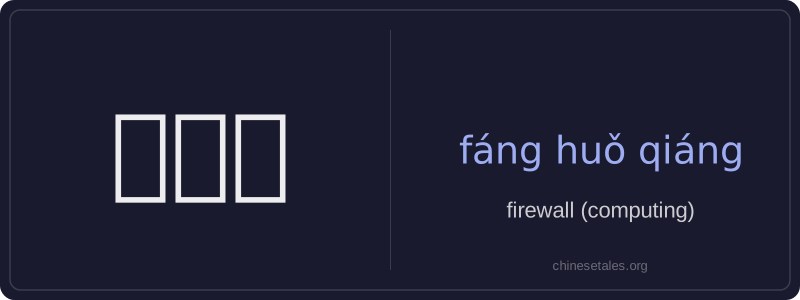
防火墙 (fáng huǒ qiáng) literally means 'fire-prevention wall' — a compound formed from 防 (fáng, 'to prevent'), 火 (huǒ, 'fire'), and 墙 (qiáng, 'wall'). In computing, it metaphorically refers to a security system that monitors and controls incoming and outgoing network traffic based on predetermined rules. Just as a physical firewall stops fire from spreading between buildings, a digital firewall blocks unauthorized access while allowing legitimate communication.
This term is widely used in IT contexts, cybersecurity discussions, and everyday tech conversations in Chinese. It’s a loanword adaptation — not a direct translation of the English 'firewall', but a culturally resonant calque that leverages familiar imagery. You’ll encounter it in settings like corporate IT policies, home router setups, or software security features.
Example Sentences
Related Words
国语
‘Guó yǔ’ literally means 'national language'—
无论谁
‘无论谁’ (wú lùn shéi) is a pronoun meaning
外语
‘外语’ literally means ‘outside language’ —
面条
‘面条’ (miàn tiáo) literally means ‘flour str
认同
‘认同’ (tóng rèn) is a verb meaning ‘to ident
不对
不对 (bù duì) literally combines 不 (bù), meani
认为
‘认为’ (rèn wéi) is a transitive verb meaning
违规
违规 (wéi guī) literally means 'to violate rules