Word Explanation
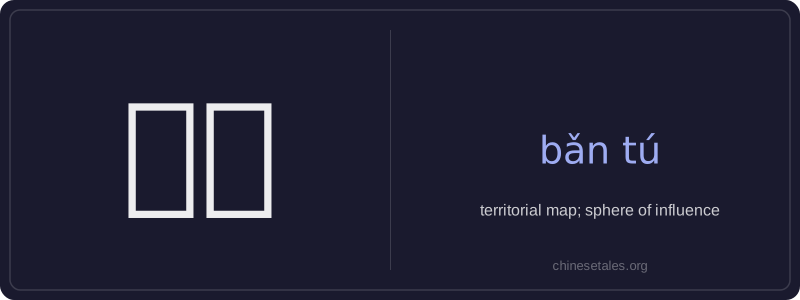
版图 literally combines 'bǎn' (originally meaning 'wooden printing block' or 'edition') and 'tú' (map or diagram). Historically, it referred to the official map engraved on wood for imperial administration, thus evolving to mean a nation’s officially recognized territory — its geographical boundaries and sovereign domain. Today, it carries both concrete and figurative weight: in political and historical contexts, it denotes actual land area under control (e.g., 'expanding one’s territory'); in business or culture, it often metaphorically describes a sphere of influence or operational reach.
The word is formal and slightly literary — common in news reports, history textbooks, diplomatic discourse, and strategic planning documents. It evokes sovereignty, legitimacy, and scope, and is rarely used in casual speech. Unlike simpler terms like 地区 (area) or 领土 (territory), 版图 emphasizes the holistic, mapped, and institutionalized conception of space — implying authority, documentation, and historical continuity.
Example Sentences
Related Words
国语
‘Guó yǔ’ literally means 'national language'—
无论谁
‘无论谁’ (wú lùn shéi) is a pronoun meaning
外语
‘外语’ literally means ‘outside language’ —
面条
‘面条’ (miàn tiáo) literally means ‘flour str
认同
‘认同’ (tóng rèn) is a verb meaning ‘to ident
不对
不对 (bù duì) literally combines 不 (bù), meani
认为
‘认为’ (rèn wéi) is a transitive verb meaning
违规
违规 (wéi guī) literally means 'to violate rules