Word Explanation
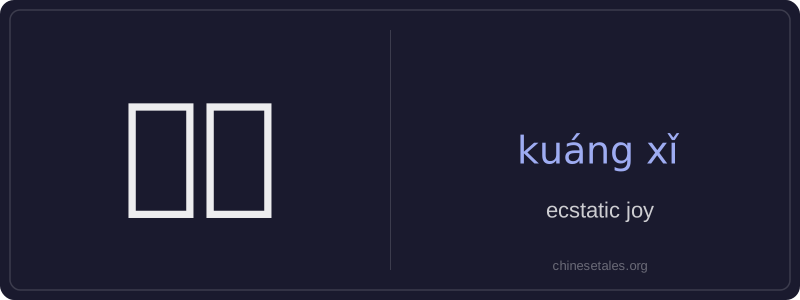
‘狂喜’ literally combines ‘狂’ (kuáng), meaning ‘frenzied’ or ‘wild,’ and ‘喜’ (xǐ), meaning ‘joy’ or ‘happiness.’ Together, they form a noun describing an intense, overwhelming, almost uncontrollable surge of joy—stronger than mere happiness or delight, closer to ecstasy or rapture. It conveys emotional intensity that may manifest physically: trembling, crying, shouting, or jumping for joy.
This word is commonly used in literary, journalistic, or dramatic contexts—not in casual daily speech—often describing reactions to extraordinary events: winning a major award, receiving life-changing news, or witnessing a long-awaited triumph. While it carries positive meaning, its forceful tone implies emotional extremity, so it’s rarely used for mild pleasures like enjoying coffee or seeing a friend. It’s more formal and vivid than synonyms like ‘高兴’ or ‘喜悦,’ and often appears in written descriptions rather than spoken conversation.
Example Sentences
Related Words
国语
‘Guó yǔ’ literally means 'national language'—
无论谁
‘无论谁’ (wú lùn shéi) is a pronoun meaning
外语
‘外语’ literally means ‘outside language’ —
面条
‘面条’ (miàn tiáo) literally means ‘flour str
认同
‘认同’ (tóng rèn) is a verb meaning ‘to ident
不对
不对 (bù duì) literally combines 不 (bù), meani
认为
‘认为’ (rèn wéi) is a transitive verb meaning
违规
违规 (wéi guī) literally means 'to violate rules