Word Explanation
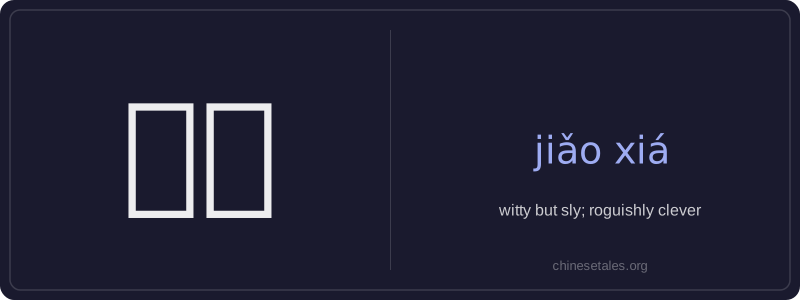
狡黠 describes a cleverness that is sharp, quick-witted, and slightly mischievous—often with a hint of cunning or playful deception. It’s not outright dishonest, but rather the kind of intelligence that sees loopholes, anticipates others’ moves, and enjoys subtle trickery. The first character 狡 (jiǎo) originally relates to slyness in animals (e.g., foxes), while 黠 (xiá) means astute or shrewd—especially in discerning hidden truths. Together, they evoke a roguish charm: think of a child who grins after pulling off a harmless prank, or a diplomat who navigates tension with graceful wit.
This word is commonly used to describe facial expressions (e.g., 狡黠的笑容), glances, or personalities—especially when someone’s intelligence is laced with playfulness or quiet calculation. It carries a light, often affectionate tone in literature and everyday speech, though context can shade it toward mild suspicion. It rarely appears in formal reports or technical writing, appearing instead in storytelling, dialogue, and descriptive prose.
Example Sentences
Related Words
国语
‘Guó yǔ’ literally means 'national language'—
无论谁
‘无论谁’ (wú lùn shéi) is a pronoun meaning
外语
‘外语’ literally means ‘outside language’ —
面条
‘面条’ (miàn tiáo) literally means ‘flour str
认同
‘认同’ (tóng rèn) is a verb meaning ‘to ident
不对
不对 (bù duì) literally combines 不 (bù), meani
认为
‘认为’ (rèn wéi) is a transitive verb meaning
违规
违规 (wéi guī) literally means 'to violate rules