Word Explanation
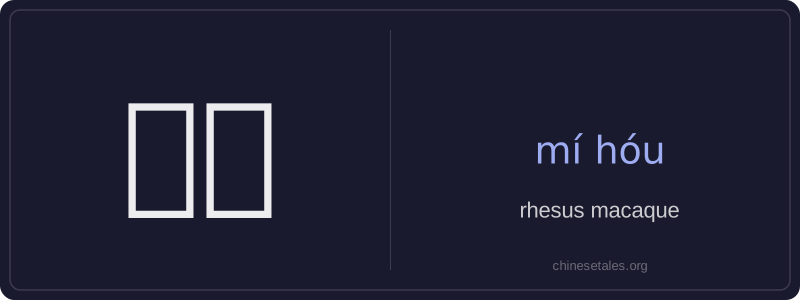
‘猕猴’ (mí hóu) is a noun referring specifically to the rhesus macaque, a medium-sized Old World monkey native to Asia. The character ‘猕’ (mí) is rarely used alone and appears almost exclusively in this compound; it carries no independent meaning in modern usage but historically relates to primate-like creatures. ‘猴’ (hóu) means ‘monkey’ and is a common, productive morpheme found in many primate-related words (e.g., 猴子, 金丝猴). Together, ‘猕猴’ forms a formal, zoological term — more precise and scientific than the colloquial ‘猴子’, which refers broadly to monkeys in general.
This word appears frequently in biology textbooks, nature documentaries, wildlife conservation reports, and research contexts. It is also used in traditional Chinese medicine (where ‘猕猴骨’ or ‘猕猴脑’ may be mentioned historically, though such uses are now rare and ethically restricted). Unlike ‘猴子’, ‘猕猴’ is not used metaphorically or playfully in everyday speech — you won’t hear it in idioms like ‘猴急’ or casual expressions.
Example Sentences
Related Words
国语
‘Guó yǔ’ literally means 'national language'—
无论谁
‘无论谁’ (wú lùn shéi) is a pronoun meaning
外语
‘外语’ literally means ‘outside language’ —
面条
‘面条’ (miàn tiáo) literally means ‘flour str
认同
‘认同’ (tóng rèn) is a verb meaning ‘to ident
不对
不对 (bù duì) literally combines 不 (bù), meani
认为
‘认为’ (rèn wéi) is a transitive verb meaning
违规
违规 (wéi guī) literally means 'to violate rules