Word Explanation
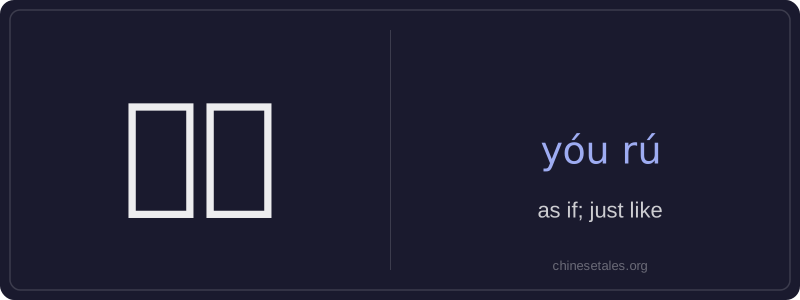
犹如 is a literary and formal conjunction or adverb meaning 'as if' or 'just like'. It introduces a simile—comparing one thing to another in a vivid, often poetic way. The character 犹 (yóu) originally meant 'still' or 'yet', carrying a sense of continuity or lingering resemblance; 如 (rú) means 'to be like' or 'as'. Together, they form a fixed compound emphasizing strong similarity—not just superficial likeness, but evocative, almost tangible equivalence. It’s commonly used in descriptive writing, speeches, classical allusions, and formal narration.
Unlike colloquial comparatives like 像…一样, 犹如 conveys elegance and rhetorical weight. It typically appears before a noun or clause, followed by the thing being compared to (e.g., 犹如…一般/似的/般). While grammatically flexible, it rarely stands alone and never takes verbal complements directly—it sets up the comparison, not the action.
Example Sentences
Related Words
国语
‘Guó yǔ’ literally means 'national language'—
无论谁
‘无论谁’ (wú lùn shéi) is a pronoun meaning
外语
‘外语’ literally means ‘outside language’ —
面条
‘面条’ (miàn tiáo) literally means ‘flour str
认同
‘认同’ (tóng rèn) is a verb meaning ‘to ident
不对
不对 (bù duì) literally combines 不 (bù), meani
认为
‘认为’ (rèn wéi) is a transitive verb meaning
违规
违规 (wéi guī) literally means 'to violate rules