Word Explanation
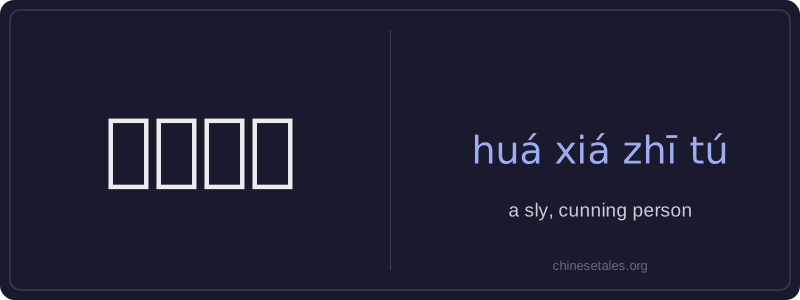
‘猾黠之徒’ is a classical-style noun phrase meaning ‘a sly, cunning person’ — often with negative connotations of deceitfulness or underhanded cleverness. The character 猾 (huá) means ‘crafty’ or ‘sneaky’, while 黠 (xiá) adds nuance of sharp, shrewd intelligence — together they intensify the sense of guile. 之 (zhī) is a literary possessive or attributive particle (like ‘of’ or ‘-’), and 徒 (tú) means ‘person’ or ‘follower’, often implying a group or type of people (e.g., ‘rogues’, ‘scoundrels’). Though grammatically neutral, the term carries strong disapproval and is commonly used in formal writing, historical narratives, or satirical commentary.
This expression evokes imagery reminiscent of sly animals — like foxes or weasels — which is why it’s categorized under ‘Animals’: it draws on traditional Chinese associations between animal behavior and human moral traits. It’s rarely used in casual speech but appears in literature, journalism, and political rhetoric to criticize manipulative individuals or corrupt officials.
Example Sentences
Related Words
国语
‘Guó yǔ’ literally means 'national language'—
无论谁
‘无论谁’ (wú lùn shéi) is a pronoun meaning
外语
‘外语’ literally means ‘outside language’ —
面条
‘面条’ (miàn tiáo) literally means ‘flour str
认同
‘认同’ (tóng rèn) is a verb meaning ‘to ident
不对
不对 (bù duì) literally combines 不 (bù), meani
认为
‘认为’ (rèn wéi) is a transitive verb meaning
违规
违规 (wéi guī) literally means 'to violate rules