Word Explanation
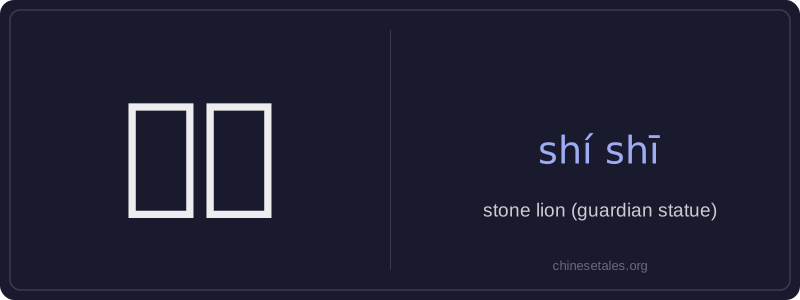
A shí shī is a traditional Chinese stone-carved lion statue, commonly placed in pairs at the entrances of temples, imperial palaces, government buildings, and wealthy households. Though called 'lion', the creature depicted is mythological—often with stylized features like an open mouth (to ward off evil) and a closed mouth (to retain good fortune)—and reflects ancient Chinese beliefs in protective symbolism rather than realistic zoology.
The word combines two characters: shí (stone), indicating the material, and shī (lion), referring to the animal form. These statues are deeply embedded in Chinese architectural tradition and feng shui practice, and are especially prominent in southern Fujian province—home to the famous city of Shishi (literally 'Stone Lion City'), named after its historic stone lion carvings.
Example Sentences
Related Words
国语
‘Guó yǔ’ literally means 'national language'—
无论谁
‘无论谁’ (wú lùn shéi) is a pronoun meaning
外语
‘外语’ literally means ‘outside language’ —
面条
‘面条’ (miàn tiáo) literally means ‘flour str
认同
‘认同’ (tóng rèn) is a verb meaning ‘to ident
不对
不对 (bù duì) literally combines 不 (bù), meani
认为
‘认为’ (rèn wéi) is a transitive verb meaning
违规
违规 (wéi guī) literally means 'to violate rules