Word Explanation
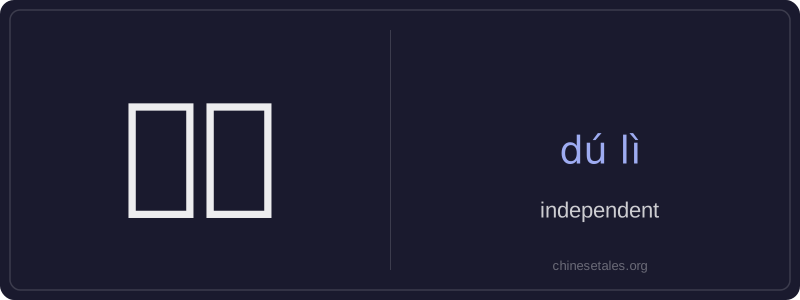
独立 (dú lì) literally combines 独 (‘alone, solitary’) and 立 (‘to stand’), evoking the image of ‘standing alone’ — hence its core meaning: independent, self-reliant, or autonomous. As an adjective, it describes a person, organization, or system that functions without external support or control. As a noun, it refers to the state of independence itself (e.g., national independence or personal autonomy).
The word is widely used in both everyday and formal contexts — from describing a child learning to dress independently (日常自理) to discussing political sovereignty (国家独立). It carries a positive connotation, often associated with maturity, responsibility, and capability. Unlike the more neutral 自己的 (‘one’s own’), 独立 emphasizes active self-sufficiency and agency, not just possession or origin.
Example Sentences
Related Words
国语
‘Guó yǔ’ literally means 'national language'—
无论谁
‘无论谁’ (wú lùn shéi) is a pronoun meaning
外语
‘外语’ literally means ‘outside language’ —
面条
‘面条’ (miàn tiáo) literally means ‘flour str
认同
‘认同’ (tóng rèn) is a verb meaning ‘to ident
不对
不对 (bù duì) literally combines 不 (bù), meani
认为
‘认为’ (rèn wéi) is a transitive verb meaning
违规
违规 (wéi guī) literally means 'to violate rules