Word Explanation
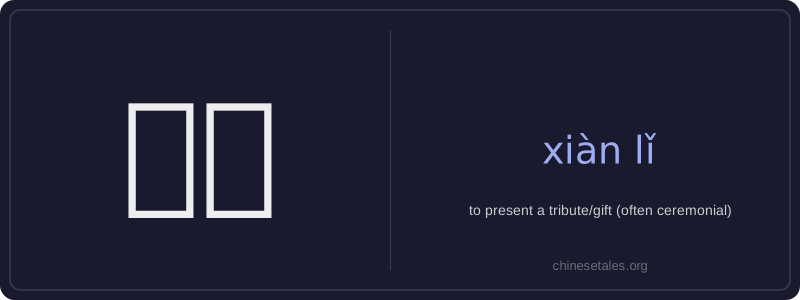
‘献礼’ literally combines ‘献’ (xiàn), meaning ‘to present’ or ‘to offer’, and ‘礼’ (lǐ), meaning ‘ritual’, ‘ceremony’, or ‘gift’. Together, it denotes the formal, respectful act of presenting a tribute—often in honor of a person, occasion, or institution. It carries strong connotations of reverence, gratitude, or celebration, and is frequently used in official, cultural, or commemorative contexts such as national holidays, anniversaries, or opening ceremonies.
The word implies intentionality and solemnity—not just giving a gift, but offering something meaningful with symbolic weight. While it can refer to physical objects (e.g., a sculpture, performance, or publication), it’s equally common for intangible contributions like songs, films, or academic research to be described as ‘献礼’ when created specifically to mark an important event or milestone. It is rarely used in casual, everyday exchanges.
Example Sentences
Related Words
国语
‘Guó yǔ’ literally means 'national language'—
无论谁
‘无论谁’ (wú lùn shéi) is a pronoun meaning
外语
‘外语’ literally means ‘outside language’ —
面条
‘面条’ (miàn tiáo) literally means ‘flour str
认同
‘认同’ (tóng rèn) is a verb meaning ‘to ident
不对
不对 (bù duì) literally combines 不 (bù), meani
认为
‘认为’ (rèn wéi) is a transitive verb meaning
违规
违规 (wéi guī) literally means 'to violate rules