Word Explanation
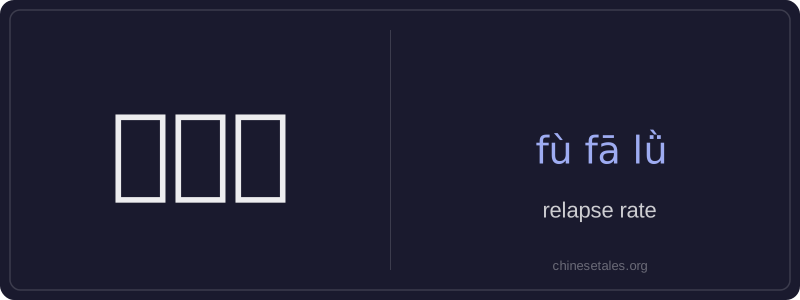
复发率 (fù fā lǜ) is a medical term meaning 'relapse rate' — the percentage or proportion of patients whose disease returns after initial treatment and apparent recovery. The word combines three characters: 复 (fù, 'again' or 're-'), 发 (fā, 'to occur' or 'to break out'), and 率 (lǜ, 'rate' or 'ratio'). Together, they literally mean 'the rate at which something occurs again'. It is used almost exclusively in clinical, epidemiological, and public health contexts to quantify how often a condition reappears following remission or discharge.
This term appears frequently in research papers, doctor–patient discussions about prognosis, and health policy reports. It is typically expressed as a percentage (e.g., '15%') or a decimal fraction (e.g., '0.23'). Unlike general terms like 'recurrence', 复发率 specifically denotes a measured, statistical frequency — not just the event itself. It applies mainly to chronic or episodic illnesses such as cancer, depression, tuberculosis, or autoimmune disorders.
Example Sentences
Related Words
国语
‘Guó yǔ’ literally means 'national language'—
无论谁
‘无论谁’ (wú lùn shéi) is a pronoun meaning
外语
‘外语’ literally means ‘outside language’ —
面条
‘面条’ (miàn tiáo) literally means ‘flour str
认同
‘认同’ (tóng rèn) is a verb meaning ‘to ident
不对
不对 (bù duì) literally combines 不 (bù), meani
认为
‘认为’ (rèn wéi) is a transitive verb meaning
违规
违规 (wéi guī) literally means 'to violate rules