Word Explanation
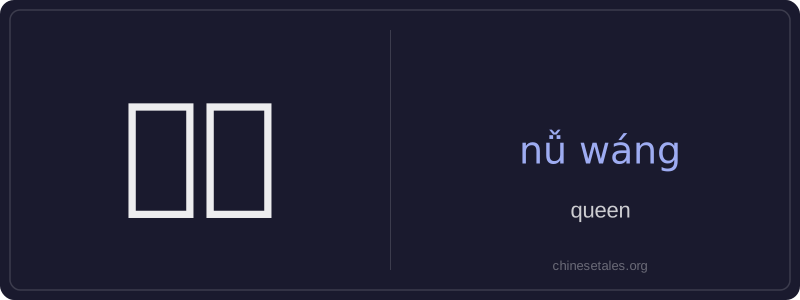
女王 (nǚ wáng) literally means 'female king' — combining 女 (nǚ), meaning 'woman' or 'female', and 王 (wáng), meaning 'king' or 'sovereign'. It refers specifically to a female monarch who rules a kingdom in her own right, such as Queen Elizabeth II of the United Kingdom. Unlike 'empress' (皇后 huánghòu, which often denotes the emperor’s wife) or 'empress regnant' (女皇 nǚhuáng), 女王 emphasizes royal authority grounded in gender-specific sovereignty and is commonly used for rulers of constitutional monarchies or historical kingdoms.
The term appears frequently in history, literature, and media — for example, in stories about ancient Chinese states like Nüguo (the legendary 'Kingdom of Women') or modern references to powerful female leaders in fiction and news. It carries formal, respectful, and sometimes slightly literary connotations, and is rarely used metaphorically in casual speech — unlike English 'queen', which can be playful (e.g., 'queen of pop').
Example Sentences
Related Words
国语
‘Guó yǔ’ literally means 'national language'—
无论谁
‘无论谁’ (wú lùn shéi) is a pronoun meaning
外语
‘外语’ literally means ‘outside language’ —
面条
‘面条’ (miàn tiáo) literally means ‘flour str
认同
‘认同’ (tóng rèn) is a verb meaning ‘to ident
不对
不对 (bù duì) literally combines 不 (bù), meani
认为
‘认为’ (rèn wéi) is a transitive verb meaning
违规
违规 (wéi guī) literally means 'to violate rules