Word Explanation
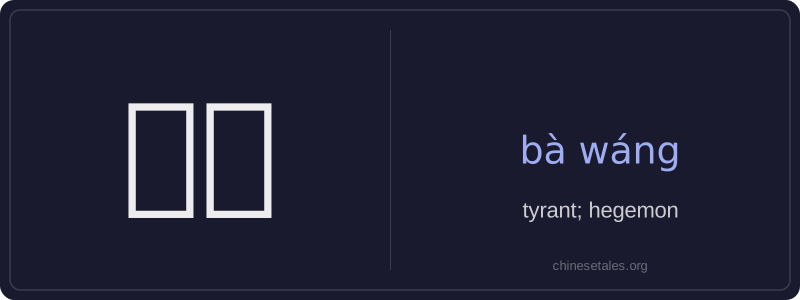
‘霸王’ literally combines ‘霸’ (bà), meaning ‘overlord’ or ‘hegemon’, and ‘王’ (wáng), meaning ‘king’ or ‘ruler’. Together, they form a compound noun that conveys an authoritarian, domineering ruler—often one who seizes power by force rather than legitimate succession. Historically, it refers to warlords or regional strongmen in ancient China, like Xiang Yu, who was famously called ‘Xīchǔ Bàwáng’ (Hegemon-King of Western Chu). The term carries strong negative connotations of tyranny, arrogance, and unchecked power.
In modern usage, ‘霸王’ appears in idioms (e.g., 霸王条款 — ‘tyrannical clause’, meaning an unfair, one-sided contract term) and figurative expressions. It’s also used playfully or hyperbolically to describe someone who dominates a situation—like a child who always takes the biggest cookie—but even then, the undertone of illegitimacy or unfairness remains. The word is rarely neutral; context determines whether it’s historical, legal, or colloquial—but never complimentary.
Example Sentences
Related Words
国语
‘Guó yǔ’ literally means 'national language'—
无论谁
‘无论谁’ (wú lùn shéi) is a pronoun meaning
外语
‘外语’ literally means ‘outside language’ —
面条
‘面条’ (miàn tiáo) literally means ‘flour str
认同
‘认同’ (tóng rèn) is a verb meaning ‘to ident
不对
不对 (bù duì) literally combines 不 (bù), meani
认为
‘认为’ (rèn wéi) is a transitive verb meaning
违规
违规 (wéi guī) literally means 'to violate rules