Word Explanation
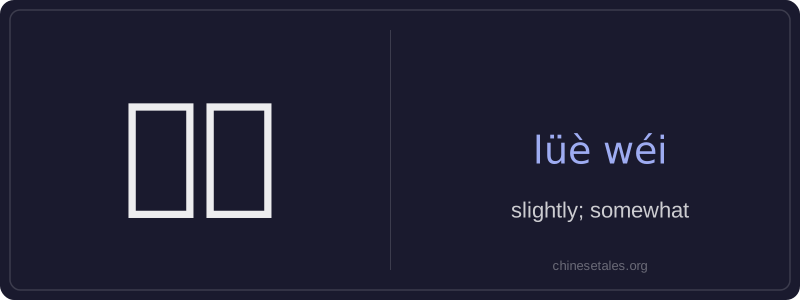
略为 is an adverb meaning 'slightly' or 'somewhat', used to indicate a small degree of change, feeling, or quality. It combines the character 略 (lüè), meaning 'briefly', 'slightly', or 'to omit', and 为 (wéi), which here functions as a classical particle adding nuance rather than its common meaning 'to be' or 'to do'. Together, they form a formal yet common expression that softens statements—often describing subtle shifts in emotion, appearance, condition, or behavior.
This word appears frequently in written Chinese and formal spoken contexts, such as news reports, essays, or polite conversation. It’s more refined than colloquial alternatives like 有点儿 or 有些, and carries a measured, understated tone. It typically modifies adjectives (e.g., 略为紧张) or verbs (e.g., 略为迟疑), but never nouns or numbers directly. While it can appear mid-sentence, it most often precedes the adjective or verb it modifies, similar to English adverbs like 'slightly'.
Example Sentences
Related Words
国语
‘Guó yǔ’ literally means 'national language'—
无论谁
‘无论谁’ (wú lùn shéi) is a pronoun meaning
外语
‘外语’ literally means ‘outside language’ —
面条
‘面条’ (miàn tiáo) literally means ‘flour str
认同
‘认同’ (tóng rèn) is a verb meaning ‘to ident
不对
不对 (bù duì) literally combines 不 (bù), meani
认为
‘认为’ (rèn wéi) is a transitive verb meaning
违规
违规 (wéi guī) literally means 'to violate rules