Word Explanation
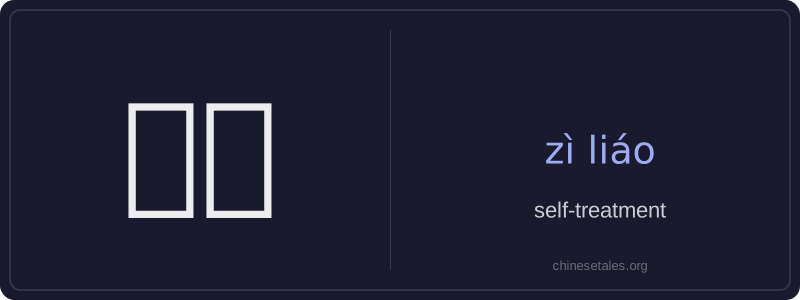
‘自疗’ literally means 'self-treatment' — it combines 自 (zì), meaning 'self' or 'oneself', and 疗 (liáo), meaning 'to treat' or 'to cure'. The term refers to managing or alleviating one’s own health conditions without professional medical help, such as using over-the-counter remedies, herbal preparations, rest, dietary adjustments, or mindfulness techniques. It emphasizes personal agency in health care but does not imply rejecting doctors; rather, it describes everyday, non-clinical coping strategies for minor ailments like colds, fatigue, or mild stress.
This word is commonly used in health education, wellness articles, and discussions about preventive care or complementary approaches. While neutral in tone, context matters: in formal medical settings, it may carry a cautionary nuance if implying avoidance of necessary treatment. It appears more frequently in written Chinese than in casual speech, often paired with words like '方法' (method), '行为' (behavior), or '实践' (practice).
Example Sentences
Related Words
国语
‘Guó yǔ’ literally means 'national language'—
无论谁
‘无论谁’ (wú lùn shéi) is a pronoun meaning
外语
‘外语’ literally means ‘outside language’ —
面条
‘面条’ (miàn tiáo) literally means ‘flour str
认同
‘认同’ (tóng rèn) is a verb meaning ‘to ident
不对
不对 (bù duì) literally combines 不 (bù), meani
认为
‘认为’ (rèn wéi) is a transitive verb meaning
违规
违规 (wéi guī) literally means 'to violate rules