Word Explanation
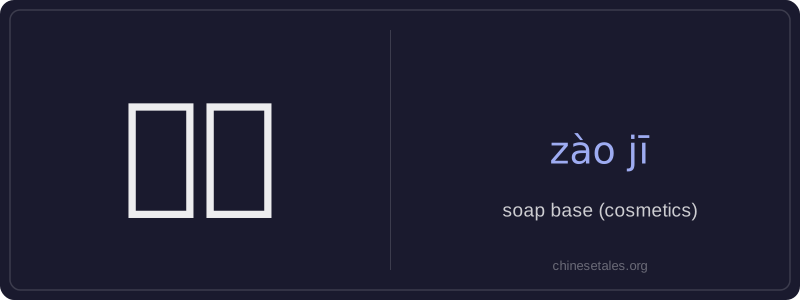
'Zào jī' (soap base) refers to the foundational, unperfumed, unscented mixture used in soap-making—typically composed of saponified oils (like coconut or olive oil), water, and sometimes glycerin or additives. The character 皂 (zào) originally meant 'black' but historically came to denote soap due to early soaps’ dark color; 基 (jī) means 'base', 'foundation', or 'fundamental component'. Together, they literally signify the core material upon which finished soaps are built.
This term is used almost exclusively in cosmetics manufacturing, skincare formulation, and DIY soap-making contexts—not in everyday conversation. It appears on ingredient labels, product specifications, and technical documentation. Unlike regular 'soap' (肥皂 féizào), 皂基 specifically denotes the raw, customizable starting material before fragrances, colors, or exfoliants are added. It’s valued for its cleansing properties and compatibility with natural additives.
Example Sentences
Related Words
国语
‘Guó yǔ’ literally means 'national language'—
无论谁
‘无论谁’ (wú lùn shéi) is a pronoun meaning
外语
‘外语’ literally means ‘outside language’ —
面条
‘面条’ (miàn tiáo) literally means ‘flour str
认同
‘认同’ (tóng rèn) is a verb meaning ‘to ident
不对
不对 (bù duì) literally combines 不 (bù), meani
认为
‘认为’ (rèn wéi) is a transitive verb meaning
违规
违规 (wéi guī) literally means 'to violate rules