Word Explanation
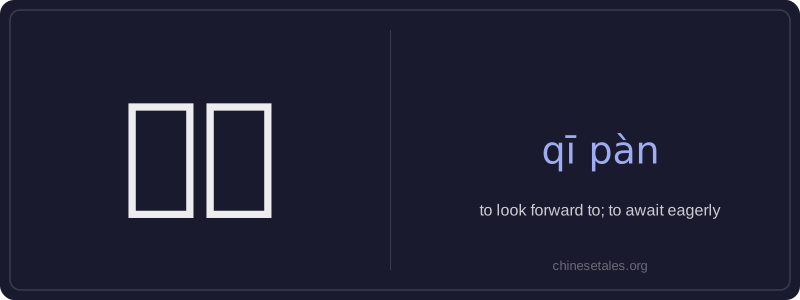
‘期盼’ is a compound verb meaning 'to look forward to' or 'to await eagerly'—it conveys strong, positive anticipation, often with emotional investment or hope. The first character, 期 (qī), means 'to expect' or 'to set a time for'; the second, 盼 (pàn), means 'to gaze longingly' or 'to yearn for'. Together, they intensify the sense of heartfelt waiting—not passive expectation, but active, hopeful longing. It’s commonly used in written and formal spoken Chinese, especially when referring to meaningful future events like reunions, achievements, or life milestones.
This word carries warmth and sincerity; it’s rarely used for trivial matters (e.g., not for waiting for a bus). It frequently appears in contexts involving family, education, national progress, or personal aspirations. While grammatically it functions as a transitive verb (taking an object), it can also stand alone as a predicate or appear in subject–predicate constructions, sometimes modified by adverbs like 深深地 or 热切地 to heighten the emotional tone.
Example Sentences
Related Words
国语
‘Guó yǔ’ literally means 'national language'—
无论谁
‘无论谁’ (wú lùn shéi) is a pronoun meaning
外语
‘外语’ literally means ‘outside language’ —
面条
‘面条’ (miàn tiáo) literally means ‘flour str
认同
‘认同’ (tóng rèn) is a verb meaning ‘to ident
不对
不对 (bù duì) literally combines 不 (bù), meani
认为
‘认为’ (rèn wéi) is a transitive verb meaning
违规
违规 (wéi guī) literally means 'to violate rules