Word Explanation
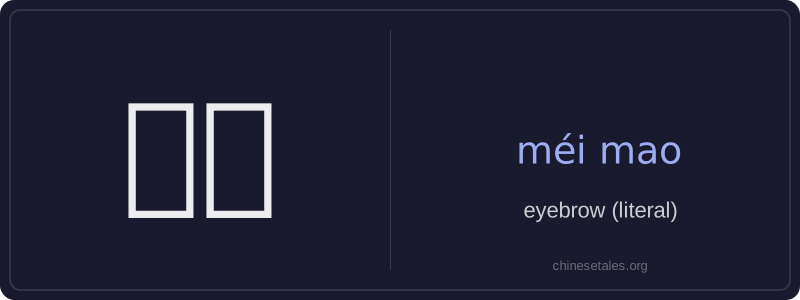
眉毛 (méi mao) literally means 'eyebrow hair' — 眉 (méi) refers to the brow or eyebrow region above the eye, and 毛 (máo) means 'hair' or 'fur'. Together, they form the standard, neutral term for the strip of hair growing on the brow ridge. Unlike English, which treats 'eyebrow' as a single anatomical unit, Chinese compounds often emphasize composition — here, highlighting that eyebrows are made of fine hairs.
This word is used in everyday contexts: describing appearance ('She has thick eyebrows'), health discussions ('Eyebrow hair loss can indicate thyroid issues'), cosmetics ('eyebrow pencil' = 眉笔), and even idioms ('raising one's eyebrows' = 扬眉, expressing surprise or pride). It’s gender-neutral, formal enough for medical settings, and commonly taught early in anatomy vocabulary.
Example Sentences
Related Words
国语
‘Guó yǔ’ literally means 'national language'—
无论谁
‘无论谁’ (wú lùn shéi) is a pronoun meaning
外语
‘外语’ literally means ‘outside language’ —
面条
‘面条’ (miàn tiáo) literally means ‘flour str
认同
‘认同’ (tóng rèn) is a verb meaning ‘to ident
不对
不对 (bù duì) literally combines 不 (bù), meani
认为
‘认为’ (rèn wéi) is a transitive verb meaning
违规
违规 (wéi guī) literally means 'to violate rules