Word Explanation
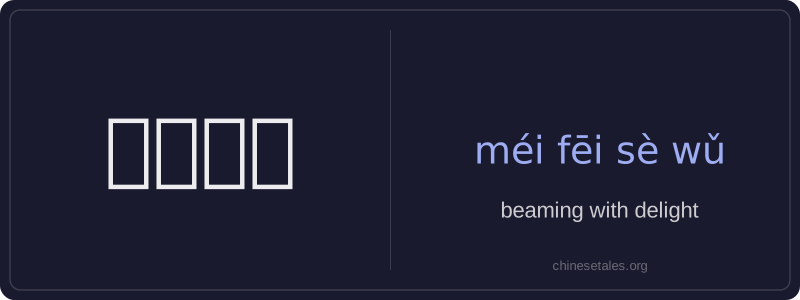
"Méi fēi sè wǔ" literally depicts eyebrows flying, facial color dancing — a vivid, classical idiom describing someone’s face lighting up with unrestrained joy and excitement. Each character contributes to the imagery: 眉 (eyebrows) suggests facial expression; 飞 (to fly) conveys liveliness and upward movement; 色 (color/complexion) refers to the flush or brightness of one’s face; and 舞 (to dance) emphasizes animated, almost rhythmic delight. Together, they form a highly expressive, literary adjective that goes beyond simple happiness — it implies visible, energetic, and contagious enthusiasm.
This idiom is commonly used in storytelling, descriptive writing, or spoken Chinese when emphasizing someone’s exuberant reaction — for example, after hearing good news, winning a prize, or recalling a joyful memory. It’s more formal and colorful than everyday words like 高兴 (gāoxìng) or 开心 (kāixīn), and often appears in narratives, speeches, or media reports to add rhetorical flair.
Example Sentences
Related Words
国语
‘Guó yǔ’ literally means 'national language'—
无论谁
‘无论谁’ (wú lùn shéi) is a pronoun meaning
外语
‘外语’ literally means ‘outside language’ —
面条
‘面条’ (miàn tiáo) literally means ‘flour str
认同
‘认同’ (tóng rèn) is a verb meaning ‘to ident
不对
不对 (bù duì) literally combines 不 (bù), meani
认为
‘认为’ (rèn wéi) is a transitive verb meaning
违规
违规 (wéi guī) literally means 'to violate rules