Word Explanation
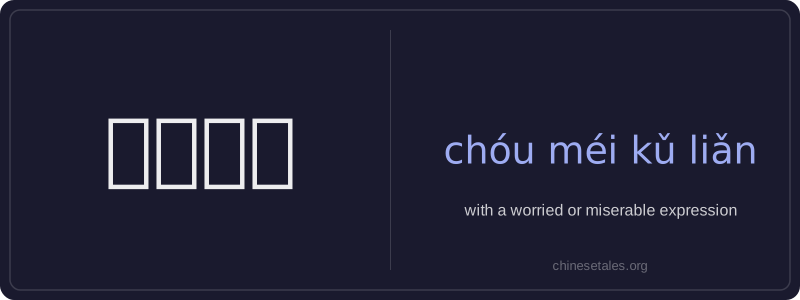
Chóu méi kǔ liǎn literally means 'worried eyebrows, bitter face'—a vivid idiom describing someone whose facial expression clearly shows deep worry, sadness, or distress. The first two characters (chóu méi) refer to furrowed brows typical of anxiety; the last two (kǔ liǎn) evoke a drawn, grimacing, or sorrowful countenance. Together, they form a fixed four-character idiom (chengyu) that functions adjectivally, often modifying nouns or used predicatively after subjects.
This expression is commonly used in both spoken and written Chinese to portray visible emotional strain—not just mild concern, but a pronounced, almost theatrical look of misery or helplessness. It frequently appears in storytelling, descriptions of characters’ reactions, or empathetic commentary. While it carries a slightly literary or expressive tone, it remains widely understood and used in everyday contexts when emphasizing strong negative emotion reflected physically.
Example Sentences
Related Words
国语
‘Guó yǔ’ literally means 'national language'—
无论谁
‘无论谁’ (wú lùn shéi) is a pronoun meaning
外语
‘外语’ literally means ‘outside language’ —
面条
‘面条’ (miàn tiáo) literally means ‘flour str
认同
‘认同’ (tóng rèn) is a verb meaning ‘to ident
不对
不对 (bù duì) literally combines 不 (bù), meani
认为
‘认为’ (rèn wéi) is a transitive verb meaning
违规
违规 (wéi guī) literally means 'to violate rules