Word Explanation
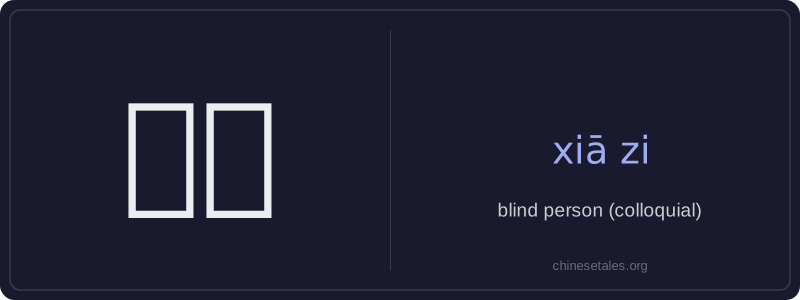
‘瞎子’ literally combines 瞎 (xiā), meaning 'blind' or 'vision-impaired', and 子 (zi), a common noun suffix that adds a colloquial, sometimes slightly informal or affectionate tone. While it directly denotes a person who is blind, it is primarily used in spoken, everyday Mandarin—not formal writing or medical contexts—where terms like 失明者 (shīmíng zhě) or 视力障碍者 (shìlì zhàng'ài zhě) are preferred. The word carries no inherent disrespect when used neutrally among friends or in storytelling, but sensitivity is advised depending on context and relationship.
Historically, 瞎子 appears in folk tales, proverbs, and regional dialects—for example, the idiom ‘瞎子摸象’ (xiāzi mō xiàng, 'the blind men and the elephant')—highlighting its deep roots in oral culture. It’s rarely used as a self-reference today, and speakers often choose more respectful alternatives in professional or empathetic settings.
Example Sentences
Related Words
国语
‘Guó yǔ’ literally means 'national language'—
无论谁
‘无论谁’ (wú lùn shéi) is a pronoun meaning
外语
‘外语’ literally means ‘outside language’ —
面条
‘面条’ (miàn tiáo) literally means ‘flour str
认同
‘认同’ (tóng rèn) is a verb meaning ‘to ident
不对
不对 (bù duì) literally combines 不 (bù), meani
认为
‘认为’ (rèn wéi) is a transitive verb meaning
违规
违规 (wéi guī) literally means 'to violate rules