Word Explanation
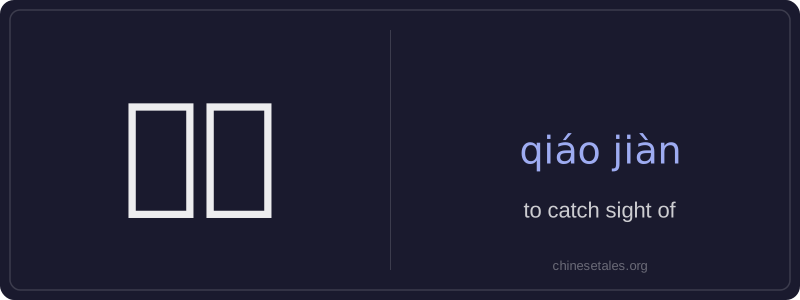
瞧见 is a colloquial verb meaning 'to catch sight of' or 'to happen to see' — it emphasizes the sudden, often unplanned, visual perception of something or someone. The first character 瞧 (qiáo) means 'to look' or 'to glance', carrying an informal, conversational tone; the second character 见 (jiàn) means 'to see' or 'to meet', reinforcing the act of visual recognition. Together, they form a compound verb that conveys immediacy and spontaneity — not a deliberate, sustained act of looking, but rather a brief, incidental noticing.
This word is commonly used in spoken Mandarin and informal writing, especially in northern dialects. It frequently appears in narrative descriptions, dialogue, or recounting personal experiences where visual awareness plays a key role. Unlike formal alternatives like 看到 (kàn dào), 瞧见 feels warmer and more vivid, often implying mild surprise or casual discovery. It does not take aspect particles like 了 or 过 as readily as standard verbs, and is rarely used in formal documents or academic contexts.
Example Sentences
Related Words
国语
‘Guó yǔ’ literally means 'national language'—
无论谁
‘无论谁’ (wú lùn shéi) is a pronoun meaning
外语
‘外语’ literally means ‘outside language’ —
面条
‘面条’ (miàn tiáo) literally means ‘flour str
认同
‘认同’ (tóng rèn) is a verb meaning ‘to ident
不对
不对 (bù duì) literally combines 不 (bù), meani
认为
‘认为’ (rèn wéi) is a transitive verb meaning
违规
违规 (wéi guī) literally means 'to violate rules