Word Explanation
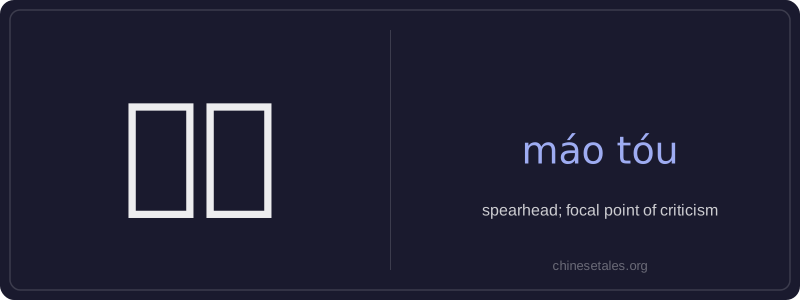
‘矛头’ literally means ‘spearhead’—combining 矛 (máo), an ancient Chinese spear or lance, and 头 (tóu), meaning ‘head’ or ‘tip’. Historically, it referred to the pointed metal tip of a spear used in combat. Today, its primary usage is figurative: it denotes the focal point or target of criticism, blame, anger, or attack—often in political, social, or interpersonal contexts. Just as a spear’s physical head directs force, ‘矛头’ signals where collective dissatisfaction or hostility is aimed.
This word carries a strong, often negative connotation and appears frequently in formal writing, news reports, and public discourse. It is rarely used in literal, physical descriptions today (e.g., you wouldn’t say ‘the 矛头 of this antique weapon’ unless deliberately evoking classical imagery). Instead, it functions idiomatically—always paired with verbs like 指向 (point toward), 转向 (shift toward), or 集中在 (concentrate on)—to indicate where criticism or pressure is being directed.
Example Sentences
Related Words
国语
‘Guó yǔ’ literally means 'national language'—
无论谁
‘无论谁’ (wú lùn shéi) is a pronoun meaning
外语
‘外语’ literally means ‘outside language’ —
面条
‘面条’ (miàn tiáo) literally means ‘flour str
认同
‘认同’ (tóng rèn) is a verb meaning ‘to ident
不对
不对 (bù duì) literally combines 不 (bù), meani
认为
‘认为’ (rèn wéi) is a transitive verb meaning
违规
违规 (wéi guī) literally means 'to violate rules