Word Explanation
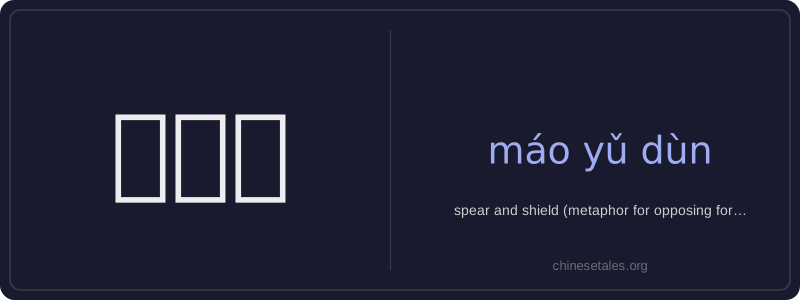
‘矛与盾’ (máo yǔ dùn) literally means ‘spear and shield’—two ancient weapons representing opposing functions: the spear pierces, while the shield blocks. This phrase originates from a famous fable in the Warring States period, where a vendor boasts his spear can pierce any shield and his shield can block any spear, exposing a logical contradiction. As a set phrase, it functions as a metaphor for irreconcilable opposites, self-contradictory claims, or conflicting forces within a single system.
The term is widely used in formal writing, political discourse, philosophical discussion, and everyday critique to highlight inconsistency or paradox. It carries classical literary weight and evokes critical thinking—similar to English expressions like ‘a house divided against itself’ or ‘the irresistible force meets the immovable object.’ Though the characters 矛 and 盾 individually refer to real weapons (and historically to animals or creatures symbolizing aggression and defense), the compound is almost never used literally today; its power lies entirely in its figurative, rhetorical function.
Example Sentences
Related Words
国语
‘Guó yǔ’ literally means 'national language'—
无论谁
‘无论谁’ (wú lùn shéi) is a pronoun meaning
外语
‘外语’ literally means ‘outside language’ —
面条
‘面条’ (miàn tiáo) literally means ‘flour str
认同
‘认同’ (tóng rèn) is a verb meaning ‘to ident
不对
不对 (bù duì) literally combines 不 (bù), meani
认为
‘认为’ (rèn wéi) is a transitive verb meaning
违规
违规 (wéi guī) literally means 'to violate rules