Word Explanation
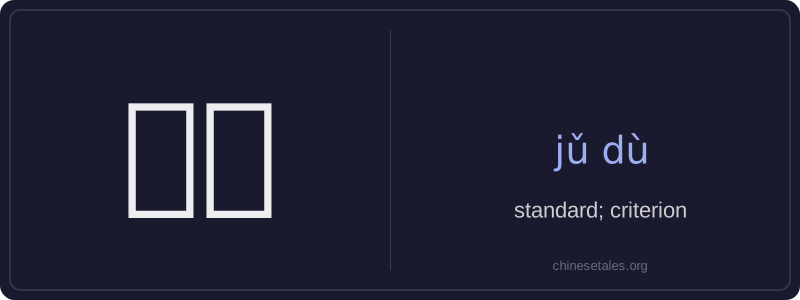
矩度 (jǔ dù) is a formal, literary noun meaning 'standard' or 'criterion'—a benchmark against which things are measured or judged. The character 矩 originally referred to a carpenter’s square, symbolizing correctness and conformity; 度 means 'measure' or 'degree.' Together, they evoke the idea of an authoritative, objective standard—often moral, behavioral, or procedural—not merely a physical measurement. It appears frequently in classical texts, official documents, and formal speech, carrying connotations of fairness, consistency, and legitimacy.
This word is rarely used in casual conversation. Instead, it’s found in contexts like education policy ('adhering to academic 矩度'), ethical discourse ('moral 矩度'), or quality control ('technical 矩度'). Unlike more common synonyms like 标准 (biāozhǔn), 矩度 implies weightiness and tradition—it suggests a norm that has stood the test of time or been endorsed by authority. Learners should note its elevated register and avoid using it in everyday requests or informal comparisons.
Example Sentences
Related Words
国语
‘Guó yǔ’ literally means 'national language'—
无论谁
‘无论谁’ (wú lùn shéi) is a pronoun meaning
外语
‘外语’ literally means ‘outside language’ —
面条
‘面条’ (miàn tiáo) literally means ‘flour str
认同
‘认同’ (tóng rèn) is a verb meaning ‘to ident
不对
不对 (bù duì) literally combines 不 (bù), meani
认为
‘认为’ (rèn wéi) is a transitive verb meaning
违规
违规 (wéi guī) literally means 'to violate rules