Word Explanation
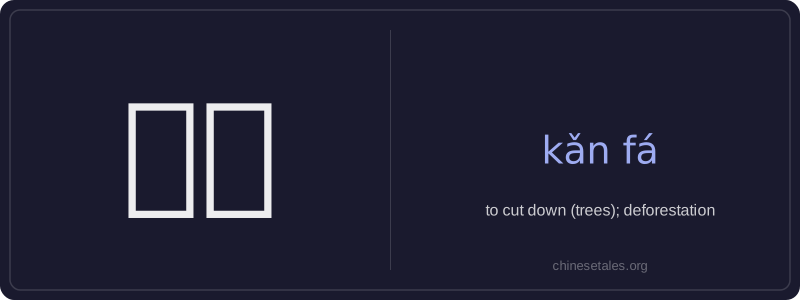
砍伐 is a compound verb meaning 'to cut down (trees)'—most commonly used in the context of logging, forest clearing, or deforestation. The first character, 砍 (kǎn), means 'to chop' or 'to hack', often with an axe or machete; the second, 伐 (fá), historically meant 'to attack' or 'to subdue', but in modern usage it strongly connotes 'cutting down trees' (as in 伐木, fámù, 'timber harvesting'). Together, they form a formal, slightly literary term emphasizing deliberate, large-scale removal of trees—not casual pruning or trimming.
This word appears frequently in environmental discussions, government policies, news reports, and ecological studies. It carries a neutral-to-negative connotation depending on context: while sustainable 砍伐 may be permitted under regulation, uncontrolled or illegal 砍伐 is widely criticized for causing habitat loss and climate impact. It is rarely used for cutting non-woody plants or shrubs—those would typically use verbs like 剪 (jiǎn) or 拔 (bá).
Example Sentences
Related Words
国语
‘Guó yǔ’ literally means 'national language'—
无论谁
‘无论谁’ (wú lùn shéi) is a pronoun meaning
外语
‘外语’ literally means ‘outside language’ —
面条
‘面条’ (miàn tiáo) literally means ‘flour str
认同
‘认同’ (tóng rèn) is a verb meaning ‘to ident
不对
不对 (bù duì) literally combines 不 (bù), meani
认为
‘认为’ (rèn wéi) is a transitive verb meaning
违规
违规 (wéi guī) literally means 'to violate rules