Word Explanation
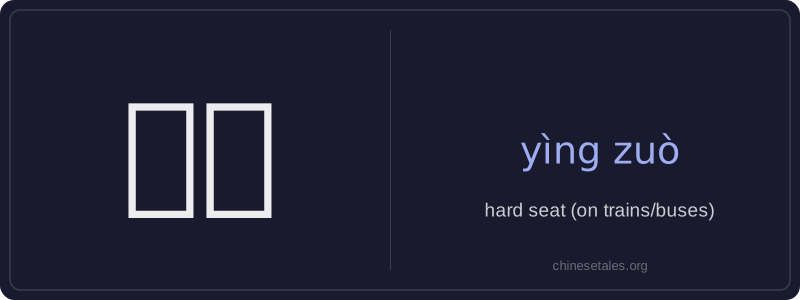
'Hard seat' (yìng zuò) refers to the standard, non-reclining, bench-style seating found on Chinese trains and some long-distance buses — typically made of wood or hard plastic with minimal cushioning. The character 硬 (yìng) means 'hard' or 'rigid', emphasizing the firmness and lack of padding; 座 (zuò) means 'seat' or 'seating'. Together, they form a compound noun that specifically denotes this basic, economical class of passenger seating.
This term is widely used in transportation contexts, especially when purchasing tickets, checking schedules, or describing travel conditions. It contrasts directly with softer, more expensive options like 软座 (ruǎn zuò, 'soft seat') or 卧铺 (wò pù, 'berth'). While 'hard seat' sounds uncomfortable in English, it’s a neutral, standard term in Chinese — not pejorative — and reflects a common, budget-friendly choice for domestic travel across China.
Example Sentences
Related Words
国语
‘Guó yǔ’ literally means 'national language'—
无论谁
‘无论谁’ (wú lùn shéi) is a pronoun meaning
外语
‘外语’ literally means ‘outside language’ —
面条
‘面条’ (miàn tiáo) literally means ‘flour str
认同
‘认同’ (tóng rèn) is a verb meaning ‘to ident
不对
不对 (bù duì) literally combines 不 (bù), meani
认为
‘认为’ (rèn wéi) is a transitive verb meaning
违规
违规 (wéi guī) literally means 'to violate rules