Word Explanation
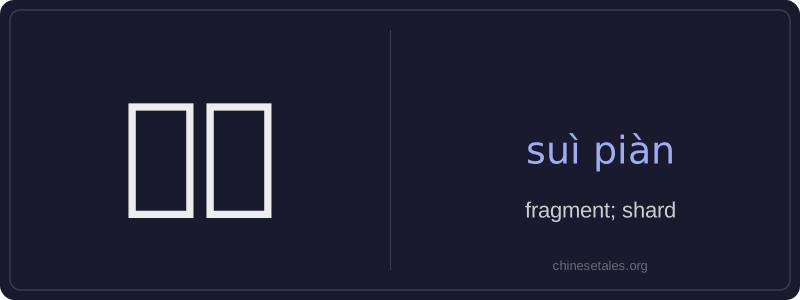
碎片 (suì piàn) literally combines 碎 (‘broken, shattered’) and 片 (‘flat piece, slice’), yielding the core meaning ‘fragment’ or ‘shard’ — a small, detached part of something originally whole. It refers to physical pieces resulting from breaking, cracking, or disintegration, such as broken glass, cracked pottery, or splintered wood. While often used for inanimate objects, it can also describe biological fragments — for example, bone fragments after injury or tissue fragments in medical contexts.
The term carries a neutral-to-negative connotation, implying loss of integrity or damage. It is commonly used in everyday speech, news reports (e.g., accident scenes), science (e.g., geological or forensic analysis), and even metaphorically (e.g., ‘碎片化信息’ — ‘fragmented information’). Unlike more general terms like 部分 (bù fèn, ‘part’), 碎片 emphasizes irregularity, small size, and accidental separation rather than intentional division.
Example Sentences
Related Words
国语
‘Guó yǔ’ literally means 'national language'—
无论谁
‘无论谁’ (wú lùn shéi) is a pronoun meaning
外语
‘外语’ literally means ‘outside language’ —
面条
‘面条’ (miàn tiáo) literally means ‘flour str
认同
‘认同’ (tóng rèn) is a verb meaning ‘to ident
不对
不对 (bù duì) literally combines 不 (bù), meani
认为
‘认为’ (rèn wéi) is a transitive verb meaning
违规
违规 (wéi guī) literally means 'to violate rules