Word Explanation
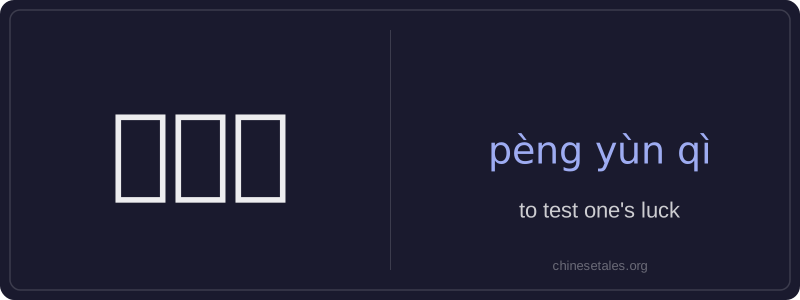
'碰运气' literally combines '碰' (to bump into, encounter), '运' (fate or fortune), and '气' (vital energy or breath), forming an idiomatic verb meaning 'to test one's luck' or 'to rely on chance rather than skill or planning.' It conveys a sense of taking an action without certainty of outcome, often with mild resignation or playful hope. The phrase suggests passively encountering fortune — like stumbling upon good (or bad) luck — rather than actively creating it.
This expression is commonly used in everyday spoken and written Chinese when describing decisions made without preparation or assurance: trying a new restaurant without checking reviews, entering a lottery, or attempting something risky with little expectation of success. It carries a neutral-to-slightly-informal tone and is rarely used in formal writing or official contexts. While not negative, it implies limited control over the result — the speaker acknowledges that success depends more on circumstance than effort.
Example Sentences
Related Words
国语
‘Guó yǔ’ literally means 'national language'—
无论谁
‘无论谁’ (wú lùn shéi) is a pronoun meaning
外语
‘外语’ literally means ‘outside language’ —
面条
‘面条’ (miàn tiáo) literally means ‘flour str
认同
‘认同’ (tóng rèn) is a verb meaning ‘to ident
不对
不对 (bù duì) literally combines 不 (bù), meani
认为
‘认为’ (rèn wéi) is a transitive verb meaning
违规
违规 (wéi guī) literally means 'to violate rules