Word Explanation
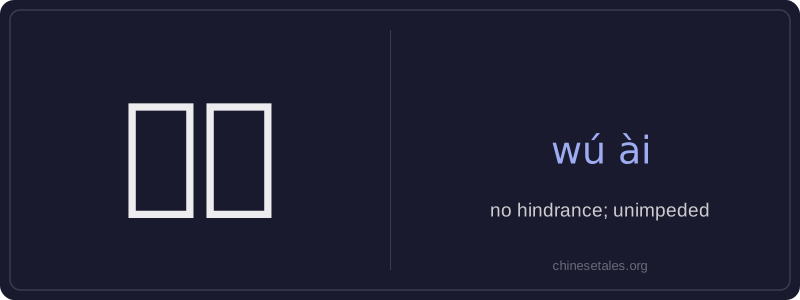
‘无碍’ literally means ‘without obstruction’ — ‘无’ (wú) means ‘not’ or ‘without’, and ‘碍’ (ài) means ‘hindrance’, ‘obstacle’, or ‘impediment’. Together, they form an adjective meaning ‘unimpeded’, ‘unhindered’, or ‘free from obstruction’. It often describes physical movement, mental clarity, or functional integrity — especially in contexts like medical reports, Buddhist philosophy, or technical descriptions of smooth operation.
The term is formal and slightly literary; it’s more common in written Chinese than casual speech. You’ll frequently see it in health-related contexts (e.g., ‘视力无碍’ — vision unimpaired), legal documents (‘通行无碍’ — unimpeded passage), or spiritual discourse (e.g., ‘心无碍’ — a mind free from attachment). While it can modify nouns directly (e.g., ‘无碍状态’), it’s most often used predicatively after 是 or in verb-complement constructions like ‘做到无碍’.
Example Sentences
Related Words
国语
‘Guó yǔ’ literally means 'national language'—
无论谁
‘无论谁’ (wú lùn shéi) is a pronoun meaning
外语
‘外语’ literally means ‘outside language’ —
面条
‘面条’ (miàn tiáo) literally means ‘flour str
认同
‘认同’ (tóng rèn) is a verb meaning ‘to ident
不对
不对 (bù duì) literally combines 不 (bù), meani
认为
‘认为’ (rèn wéi) is a transitive verb meaning
违规
违规 (wéi guī) literally means 'to violate rules