Word Explanation
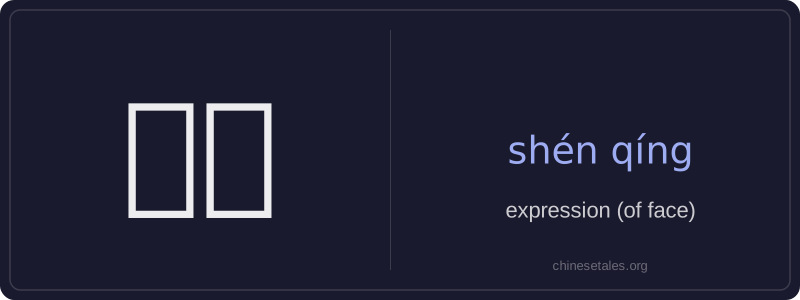
神情 refers specifically to a person’s facial expression — the visible signs on the face that reveal inner feelings, thoughts, or mental state. The character 神 (shén) means 'spirit', 'mind', or 'vital essence', suggesting the inner, intangible aspect of a person; 情 (qíng) means 'feeling' or 'emotion'. Together, they form a compound noun emphasizing how emotion manifests outwardly through the face — not just smile or frown, but subtler cues like tension around the eyes, a distant gaze, or relaxed brow.
This word is commonly used in descriptive writing, storytelling, and psychological observation. It appears frequently in literature, news reports about public figures, and everyday commentary ('His神情 was calm but tense'). Unlike more casual terms like 表情 (biǎoqíng), 神情 carries a slightly literary or observant tone and often implies depth or authenticity — it’s what you notice when someone isn’t trying to hide how they feel.
Example Sentences
Related Words
国语
‘Guó yǔ’ literally means 'national language'—
无论谁
‘无论谁’ (wú lùn shéi) is a pronoun meaning
外语
‘外语’ literally means ‘outside language’ —
面条
‘面条’ (miàn tiáo) literally means ‘flour str
认同
‘认同’ (tóng rèn) is a verb meaning ‘to ident
不对
不对 (bù duì) literally combines 不 (bù), meani
认为
‘认为’ (rèn wéi) is a transitive verb meaning
违规
违规 (wéi guī) literally means 'to violate rules