Word Explanation
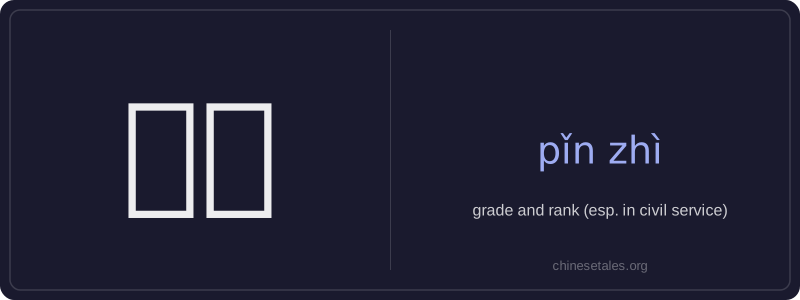
品秩 (pǐn zhì) is a formal, historical Chinese term referring to the hierarchical grade and rank system used primarily in imperial China’s civil service. The character 品 (pǐn) means 'grade' or 'class', often indicating quality or official standing; 秩 (zhì) means 'order', 'sequence', or 'rank', especially in institutional or bureaucratic contexts. Together, 品秩 denotes the dual structure of official status: both the broad grade category (e.g., first through ninth 'pin') and the precise position within that grade.
This term appears mainly in historical texts, scholarly discussions of traditional governance, and classical literature. It is rarely used in modern administrative language—today’s government positions use terms like 职级 (zhí jí, 'job level') or 职称 (zhí chēng, 'professional title'). While not obsolete, 品秩 carries strong classical and bureaucratic connotations and is seldom heard in everyday speech or contemporary news.
Example Sentences
Related Words
国语
‘Guó yǔ’ literally means 'national language'—
无论谁
‘无论谁’ (wú lùn shéi) is a pronoun meaning
外语
‘外语’ literally means ‘outside language’ —
面条
‘面条’ (miàn tiáo) literally means ‘flour str
认同
‘认同’ (tóng rèn) is a verb meaning ‘to ident
不对
不对 (bù duì) literally combines 不 (bù), meani
认为
‘认为’ (rèn wéi) is a transitive verb meaning
违规
违规 (wéi guī) literally means 'to violate rules